<?xml version="1.0" encoding="UTF-8"?>
<?xml-stylesheet type="text/xsl" media="screen" href="/~files/atom-premium.xsl"?>
                                                                                                                                                                                                                                                                                                                                                                                                                                                                                                                                             
<feed xmlns="http://www.w3.org/2005/Atom" xmlns:feedpress="https://feed.press/xmlns" xmlns:media="http://search.yahoo.com/mrss/" xmlns:podcast="https://podcastindex.org/namespace/1.0">
  <feedpress:locale>en</feedpress:locale>
  <link rel="hub" href="https://feedpress.superfeedr.com/"/>
  <logo>https://static.feedpress.com/logo/telerik-blogs-people-humanity-61853a6948c2a.jpg</logo>
  <title type="text">Telerik Blogs | People | Humanity</title>
  <subtitle type="text">The official blog of Progress Telerik - expert articles and tutorials for developers.</subtitle>
  <id>uuid:d536280c-5815-417a-ba64-256497ab1ae3;id=2925</id>
  <updated>2026-07-14T00:19:36Z</updated>
  <link rel="alternate" href="https://www.telerik.com/"/>
  <link rel="self" type="application/atom+xml" href="https://feeds.telerik.com/blogs/people-humanity"/>
  <entry>
    <id>urn:uuid:3ff2a0b3-8691-4d96-86da-ea2ef3472d6f</id>
    <title type="text">When the Time Is Right</title>
    <summary type="text">Priority tells you what matters. Timing tells you if the moment is right. Here’s why that distinction changes everything about how you build.</summary>
    <published>2026-07-09T13:18:49Z</published>
    <updated>2026-07-14T00:19:36Z</updated>
    <author>
      <name>Teon Beijl </name>
    </author>
    <link rel="alternate" href="https://feeds.telerik.com/link/23075/17375466/when-time-right"/>
    <content type="text"><![CDATA[<p><span class="featured">Priority tells you what matters. Timing tells you if the moment is right. Here&rsquo;s why that distinction changes everything about how you build.</span></p><p>A customer threatened to cancel. Full panic. A board meeting to discuss how to retain him, budget approved and allocated to honor his demands. A scrum team started fixing.&nbsp;I flew to the UK to sit with him.</p><p>We had redesigned the entire UI. Not a small fix. We completely overhauled the user experience. From a very old tool with toolbars to an application with a strip.</p><p>We didn&rsquo;t just move buttons to ribbons with tabs. We restructured the entire information architecture. Fixed, opinionated workflows that guided users through the critical steps to model complex geological concepts.</p><p>He hated it. He demanded a rollback.</p><p>I reserved time to interview him. Asked questions. Listened. Tried to sense his reality, his context, where he was coming from. How he was perceiving the changes.</p><p>What I discovered changed everything.</p><p>He wasn&rsquo;t even using the latest version. He hadn&rsquo;t tried the new UI at all. He had simply refused. While we moved on and developed the next generation of our software, he had not. He was still way behind. And somewhere at the back of the queue, feeling ignored and dismissed.</p><p>That feeling made him rage. But it also highlighted a bigger problem.</p><p>In the room next door, two junior geologists were being trained on the exact same concept. They loved it. The design was exactly what the team needed. What he needed too.</p><p>He was desperate for a transformation in his company. A way to step back from his expert role and become a guide for the younger generation. Once I explained the concepts, he understood. He was appreciative of the work. He was on board.</p><p>We almost rolled back an expensive, fundamental shift based on an emotional rant from a customer speaking from expired context.</p><p>It was never about the concept. It was about misunderstanding context.</p><h2 id="the-linearity-trap">The Linearity Trap</h2><p>A backlog is not a queue. It&rsquo;s a context-sensitive collection.</p><p>Every item in it was written at a specific moment, about a specific reality. That reality changes. The backlog doesn&rsquo;t update itself.</p><p>The linearity trap is treating it like a queue anyway. Adding new requests. Reorganizing. Managing delay. Shipping. Without ever asking: does this still belong in the collection?</p><p>The customer had been reporting improvements and bugs for a long time. But we moved on. We shipped. And while we did, he stood still. By the time his feedback reached the top of the queue, the context it was written in had long since changed.</p><p>The problem wasn&rsquo;t that we were behind. We were committing to work that was already outdated.</p><h2 id="delay-is-not-the-problem.-decay-is.">Delay Is Not the Problem. Decay Is.</h2><p>A lot of backlog management is really about managing time. Managing delivery. Focused on shipping as much high-quality work as possible by the promised date.</p><p>Managing delay is a conscious decision. It&rsquo;s about choosing when to push something back. That&rsquo;s prioritization. That&rsquo;s what I wrote about in the previous article.</p><p>But the bigger problem is decay.</p><p>Decay is what happens to the work you&rsquo;re not doing. While you&rsquo;re waiting, while you&rsquo;re delaying, what has been written down is eroding. Rusting. Because context expires.</p><p>It&rsquo;s like the best-before date on a package. By the time you grab it from the shelf, you need to check the date before you consume it.</p><p>A lot of backlogs are just queues constantly filled with requests, feedback and bug reports. Nobody checks the date. Nobody asks: is this still valid?</p><p>I&rsquo;ve seen old backlog items treated as still true when the context they described no longer existed. They were no longer worth pursuing. The more context you capture when you write them, the easier it is to later assess whether they still fit.</p><p>Something can be very old and still be good. But developing the sense to distinguish that is the work. Understanding whether it&rsquo;s expired or not. Whether it&rsquo;s still safe to consume.</p><p>In the UK, the right response would have been to delay any work on his requests. To first discover whether his feedback was based on expired context. Instead, urgency won. And decay nearly cost us everything.</p><h2 id="urgency-vs.-timing">Urgency vs. Timing</h2><p>The urgency that came up was really signaling a demand. Someone pushing. Pressure.</p><p>And under pressure, you don&rsquo;t always make the most strategic decisions. The board panicked. Money appeared. Time was freed up. Nobody stopped to check the return on investment, whether it was worth it. It was an emotional response.</p><p>That happens. We&rsquo;re humans. And that emotion is sometimes also why we close amazing deals and do great things for loyal customers. So it wasn&rsquo;t all wrong. Part of the response was also recognizing the loyalty of a customer who had been with us through harder times.</p><p>But urgency gets the attention. It drives the emotion. And what we need underneath it is judgment.</p><p>Timing is a readiness signal. It&rsquo;s not driven by pressure. It&rsquo;s driven by context.</p><ul><li>Is the customer ready? </li><li>Is the market ready? </li><li>Is the team ready? </li><li>Is the moment alive?</li></ul><p>Those are timing questions. Urgency can&rsquo;t answer them.</p><h2 id="compound-vs.-corrosion">Compound vs. Corrosion</h2><p>We&rsquo;re always looking for momentum. Shipping as much as we can, as fast as possible, without compromising quality.</p><p>But without sensing whether the time is right, we create progress without compounding.</p><p>Compounding is making sure what you ship ties into the next thing and builds over time into the desired version of your software aligned with your vision. Creating conditions so that what comes next makes sense.</p><p>The opposite is corrosion. Work that sits in the backlog long enough starts to corrode. And when you finally act on it, you might ship something that corrodes the foundation of your software rather than building it. Hurting not just momentum but overall quality.</p><p>When we made that big shift to the UI, we should have reassessed the entire backlog. Diagnosed it. Made sure there was no outdated work hiding in the queue because of it.</p><p>We didn&rsquo;t. And a decayed issue almost corroded the core concept.</p><h2 id="context-sensitivity">Context Sensitivity</h2><p>Why did feedback and previous user requests corrode? Because the timeframe wasn&rsquo;t short. That concept developed over multiple months. We should have been capturing the context shift and using it as a filter on our backlog to stay ahead of it.</p><p>But capturing context is the hard part.</p><p>The world moves on. Your market, client and economic reality change constantly. The technical reality shifts the moment you upgrade systems and build with new technologies. The context you&rsquo;re shipping into is constantly moving.</p><p>And on top of that, emotional states. Not everybody handles change well. Not everybody&rsquo;s personal context is aligned with where you&rsquo;re going.</p><p>You need to develop a sense to see those shifts.</p><h2 id="keep-a-human-in-the-loop">Keep a Human in the Loop</h2><p>AI is very good at capturing context. Writing it down. Cross-referencing it. Flagging patterns. It can help us see and track everything we can&rsquo;t manage on our own.</p><p>But the moment context is written down, it&rsquo;s already outdated. And managing that expiration date is a collaborative effort. AI can help cross-check against captured context, flag a customer as a potential churn risk, surface old backlog items that conflict with new ones.</p><p>What it can&rsquo;t do is sit in the room.</p><p>What I did with that customer&mdash;reserving time, asking questions, listening&mdash;that&rsquo;s a nuance. A human sense that becomes more important as we connect more and more data at greater and greater speed.</p><p>AI can read the signal. It can&rsquo;t always hear what&rsquo;s between the lines. The emotional rage that looks like a high-priority request but is really a loyalty problem. The developer who goes quiet in sprint planning. The feedback that reads as a bug report but is actually a cry for better onboarding.</p><p>That&rsquo;s not in the data. It&rsquo;s in the room.</p><h2 id="closure">Closure</h2><p>Timing isn&rsquo;t about managing deadlines. It&rsquo;s about reading whether the moment is right. Priority tells you what matters. Timing tells you whether now is the moment to act on it or not at all.</p><p>The backlog or data alone won&rsquo;t tell you that. You need to read the room. Develop that sense. Check the expiration date. Keep humans in the loop for the context AI can&rsquo;t capture.</p><p>We ship when it matters. We shred when it&rsquo;s expired.</p><p>On purpose. By design.</p><aside><hr data-sf-ec-immutable="" /><div class="row"><div class="col-4 u-normal-full u-small-mb0"><h4 class="u-fs20 u-fw5 u-lh125 u-mb0">How Depending Leads to Independence</h4></div><div class="col-8"><p class="u-fs16 u-mb0"><a target="_blank" href="https://www.telerik.com/blogs/how-depending-leads-independence">True independence isn&rsquo;t the absence of dependencies.</a> It&rsquo;s an intentional integration. An assembly that&rsquo;s clear, chosen and changeable.</p></div></div></aside><img src="https://feeds.telerik.com/link/23075/17375466.gif" height="1" width="1"/>]]></content>
  </entry>
  <entry>
    <id>urn:uuid:082495fa-3b2a-46e9-b13f-1d4ee4d3a2a9</id>
    <title type="text">The Importance of Empathy in Automation</title>
    <summary type="text">To take AI beyond automation into true intelligence, we need to include empathy.</summary>
    <published>2026-07-08T13:10:10Z</published>
    <updated>2026-07-14T00:19:36Z</updated>
    <author>
      <name>Jefferson S. Motta </name>
    </author>
    <link rel="alternate" href="https://feeds.telerik.com/link/23075/17374913/importance-empathy-automation"/>
    <content type="text"><![CDATA[<p><span class="featured">To take AI beyond automation into true intelligence, we need to include empathy.</span></p><p>In this post, I want to discuss a real danger we may face with AI agents, drawn from a specific interaction I witnessed on LinkedIn.</p><p>Recently, on a post where someone was presenting ideas about &ldquo;intelligent&rdquo; AI agents, the author claimed that if a customer fails to pay a SaaS subscription, the system will block access, trigger an automatic charge and apply a late fee, all without any human intervention. This was promoted as something futuristic and advanced.</p><p>I saw a disaster waiting to happen, especially considering that the same outcome could be achieved without AI, if that were ever desirable.</p><h2 id="what-was-not-considered-the-human-element">What Was Not Considered: The Human Element</h2><p>There are many situations that can lead to a missed payment. What happens, for example, if the client&rsquo;s assistant falls ill and cannot process the payment? What if they had a medical emergency and no one took over the task in time? What if the invoice never arrived? What if the client is going through a temporary hardship, but has been a loyal customer for years? Does that count for nothing? Where is the human element in the consumer relationship?</p><p>These are not far-fetched hypotheticals. They have happened with my own SaaS customers.</p><blockquote><p><strong><em>Automation without humanity is oppression at scale.</em></strong></p></blockquote><p>We could easily implement the AI agent&rsquo;s suggestion and follow the same path: missed payment, blocked account and a fine applied. But is this the right approach?</p><p>My background in neuroscience and communication reshaped how I think about the human side of technology-driven processes. That plus some life experiences lead me to consider the broader context:</p><ul><li>In many jurisdictions, consumer protection laws prohibit unilateral penalties without proper notice. Implementing such a drastic automatic response could have legal implications.</li><li>In society, there is the principle of good faith. Every commercial relationship presumes that both parties act honestly until proven otherwise. This action could have serious consequences for that business relationship and reputation.</li><li>We have to remember to consider the human context. Behind every business and every overdue charge, there are people with stories, setbacks and circumstances that must be considered before any penalty is applied.</li></ul><h2 id="what-we-should-actually-build">What We Should Actually Build</h2><p>A genuinely intelligent AI agent does not block first and ask questions later. It recognizes patterns. Has this client always paid on time? Then the delay probably has a reason. The system could send an empathetic notification before taking any action. It could offer a courtesy window. It could escalate the issue to a human when the situation is ambiguous. An intelligent agent could prioritize retaining a client, which is often worth far more than punishing a late payment.</p><p>For those building AI agents: <strong>before you automate punishment, automate empathy</strong>. Your system will reflect your values. If you build without considering the person on the other side, you could be constructing a scalable injustice machine, one capable of generating damages that could exceed any original problem the AI was trying to address.</p><blockquote><p><strong><em>Technology without empathy is not innovation. It is regression with a polished interface.</em></strong></p></blockquote><h2 id="conclusion">Conclusion</h2><p>We are at a moment where the architecture and design decisions we make today will shape how millions of people are treated by systems over which they have no control.</p><p>And to help avoid building oppressive and unjust machines, we need to cultivate empathy and uphold our organizations&rsquo; principles, with the greater purpose of <strong>serving people</strong> rather than merely extracting value from them.</p><aside><hr data-sf-ec-immutable="" /><div class="row"><div class="col-4 u-normal-full u-small-mb0"><h4 class="u-fs20 u-fw5 u-lh125 u-mb0">AI Can&rsquo;t Solve It All: What Frontend Devs Still Hate Working On</h4></div><div class="col-8"><p class="u-fs16 u-mb0">What still causes the most friction when building modern web applications? <a target="_blank" href="https://www.telerik.com/blogs/ai-cant-solve-all-what-120-frontend-developers-say-they-still-hate-working">120+ developers at JSNation and React Summit weigh in.</a></p></div></div></aside><img src="https://feeds.telerik.com/link/23075/17374913.gif" height="1" width="1"/>]]></content>
  </entry>
  <entry>
    <id>urn:uuid:0dac30b3-0498-4120-aa1e-c48cc3032b86</id>
    <title type="text">3 Tricks to Help You Stop Procrastinating</title>
    <summary type="text">You have a lot on your plate. But rather than get any of it done, you seek out distractions. If you find yourself procrastinating at work, this post has three tips to help you break this pattern.</summary>
    <published>2026-07-02T12:24:05Z</published>
    <updated>2026-07-14T00:19:36Z</updated>
    <author>
      <name>Suzanne Scacca </name>
    </author>
    <link rel="alternate" href="https://feeds.telerik.com/link/23075/17371621/3-tricks-help-stop-procrastinating"/>
    <content type="text"><![CDATA[<p><span class="featured">You have a lot on your plate. But rather than get any of it done, you seek out distractions. If you find yourself procrastinating at work, this post has three tips to help you break this pattern.</span></p><p>Procrastination isn&rsquo;t usually an issue of laziness or a lack of time-management skills. If we&rsquo;re talking about chronic procrastination, psychologists suggest it&rsquo;s an issue having more to do with self-regulation. It goes like this:</p><ul><li>You have an important task to do, be it big or small.</li><li>You know that if you don&rsquo;t do the task or get it done on time, it&rsquo;s going to create a problem for you (and probably others as well).</li><li>Yet, you willingly delay the task, knowing full well the consequences.</li><li>The distractions you seek out feel good, but it&rsquo;s only temporary.</li></ul><p>In this post, we&rsquo;re going to look at some of the reasons why people procrastinate and various tips and tricks you can do to push past it.</p><h2 id="why-do-we-procrastinate">Why Do We Procrastinate?</h2><p><a target="_blank" href="https://www.psychologytoday.com/us/basics/procrastination">According to Psychology Today</a>:</p><blockquote><p>&ldquo;Everyone puts things off sometimes, but procrastinators chronically avoid difficult tasks and may deliberately look for distractions. Procrastination tends to reflect a person&rsquo;s struggles with self-control. For habitual procrastinators, who represent approximately 20 percent of the population, &lsquo;I don&rsquo;t feel like it&rsquo; comes to take precedence over their goals or responsibilities, setting them on a downward spiral of negative emotions that further deters future effort.&rdquo;</p></blockquote><p>But why exactly do procrastinators <em>not feel like it</em>? There are a number of reasons.</p><p>For some, it&rsquo;s the pressure to be perfect and the fear of failing to live up to that standard that keeps them from getting started.</p><p>For others, it&rsquo;s because they perceive the task as being unenjoyable. So, they seek out something that will bring them joy, even temporarily.</p><p>Here are some other reasons why people may procrastinate:</p><ul><li>The task seems too big to handle.</li><li>They see little or no reward in doing it.</li><li>They&rsquo;re confused about how to do the task.</li><li>They feel overstimulated.</li><li>They feel fatigued.</li></ul><p>There are some mental health practitioners who suggest that there&rsquo;s sometimes something else at play.</p><p><a target="_blank" href="https://www.psychologytoday.com/us/blog/in-practice/202512/youre-not-a-procrastinator-youre-a-batcher">Dr. Alice Boyes</a>, for instance, says that &ldquo;batchers&rdquo; are often confused for procrastinators. Batchers are people who prefer to complete a set of tasks in a way that maximizes their productivity.</p><p>There are seven types. These are the ones most relevant to designers and developers:</p><ol><li>The time-based batcher waits to do certain tasks at specific times of the day instead of the second they hit their plate.</li><li>The volume-based batcher waits until they&rsquo;ve accumulated enough tasks and then cranks them out all at once.</li><li>The pressure-based batcher waits until they&rsquo;re closer to the delivery date (just not too close to miss it).</li><li>The context-based batcher waits until their physical environment is ideal (like the kids going to bed at night).</li><li>The identity-based batcher waits until a pre-determined time when they work in that capacity (like doing onboarding only on Mondays, wireframes on Tuesday, etc.)</li></ol><p>For some procrastinators, it&rsquo;s not about being irresponsible and delaying a task that needs to get done. It&rsquo;s that they have a preferred work method that only resembles procrastination.</p><h2 id="tricks-to-help-prevent-procrastination">3 Tricks to Help Prevent Procrastination</h2><p>Procrastination can feel good in the moment, though many people realize deep down inside the consequences won&rsquo;t feel very good. Here are some of the consequences that can result from procrastination:</p><ul><li>You wait until the last minute, forcing other critical tasks to go on the backburner.</li><li>You rush through the task, delivering it with errors, bugs, inconsistencies or other quality issues.</li><li>You feel stressed and overwhelmed, which leaves you in a heightened state of aggravation the rest of the day.</li><li>You miss your deadline. Your boss or client is displeased with you, which may keep you from better opportunities or advancements down the road.</li><li>You regularly procrastinate, which inevitably leads to sleepless nights, health issues and burnout.</li></ul><p>If you&rsquo;re worried you&rsquo;re headed down this path, here are some tricks you can use to stop procrastinating:</p><h2 id="use-a-task-management-tool">1. Use a Task Management Tool</h2><p>There are a couple of issues that can be resolved by <a target="_blank" href="https://www.telerik.com/blogs/4-project-management-strategies-help-build-professional-credibility">using a project-management tool</a> to schedule your tasks.</p><p>Let&rsquo;s say your boss calls you up and tells you they need a landing page built by Friday for a new Facebook ad campaign. You&rsquo;ve got it on your mind all week, but you keep dragging your feet. You hate building landing pages and would rather focus on maintaining and updating their website.</p><p>There&rsquo;s a big difference between knowing you have a task to do versus seeing it on a timeline or task list in front of you. That said, you might still feel a sense of pressure whenever you see this looming task.</p><p>What may help is having a tool that allows you to create an actionable and fully editable plan for the day, week and month ahead.</p><p>My suggestion is to find a scheduler that:</p><h3 id="allows-you-to-plan-your-days-down-to-the-hour">Allows You to Plan Your Days Down to the Hour</h3><p>Instead of just adding a three-hour task to build the landing page, you can set aside specific hours when you know you will be ready and able to get it done.</p><p><a target="_blank" href="https://www.atlassian.com/blog/productivity/find-productive-hours">Everyone&rsquo;s most productive hours</a> are different. If you haven&rsquo;t found yours yet, spend some time looking into it so you can schedule different kinds of tasks when you&rsquo;re mentally and energetically up to the challenge.</p><h3 id="comes-with-drag-and-drop-capabilities">Comes with Drag-and-Drop Capabilities</h3><p>If you&rsquo;re not feeling up to a certain task but it&rsquo;s up next on your schedule, simply drag it to a new time slot where you can reasonably tackle it.</p><p>This is why I love calendar-based time management tools. When you can see the whole week or even month ahead, <em>and</em> your deadlines are clearly marked, you can shift things around to suit how you&rsquo;re feeling in that moment.</p><h3 id="enables-you-to-build-in-free-time-or-buffers">Enables You to Build in Free Time or Buffers</h3><p>If you&rsquo;re filling your schedule to the brim every day with no wiggle room, it&rsquo;s going to make any level of procrastination worse. So, give yourself some breathing room.</p><p>For instance, I give myself a two-hour break in the middle of every work day. I don&rsquo;t have to use it all. But just having it on the calendar gives me the grace to work when I&rsquo;m up to the task instead of wasting my time on social media, Reddit, etc.</p><h3 id="allows-you-to-check-off-tasks-as-you-finish-them">Allows You to Check Off Tasks as You Finish Them</h3><p>The physical (or digital) act of <a target="_blank" href="https://www.atlassian.com/blog/productivity/the-psychology-of-checklists-why-setting-small-goals-motivates-us-to-accomplish-bigger-things">checking an item off a task list releases a hit of dopamine</a>.</p><p>One of the reasons why procrastinators seek out distractions is to activate their pleasure center. By setting up your task manager to create a similar sensation (and one that comes with rewards in the end instead of consequences), it may become addictive in a positive way.</p><h2 id="make-the-task-smaller">2. Make the Task Smaller</h2><p>A lot of times, it&rsquo;s the size of the task that intimidates people and leads them to procrastinate. For example, let&rsquo;s say you&rsquo;re <a target="_blank" href="https://www.telerik.com/blogs/design-systems-developers">building a design system</a> for a new app you&rsquo;re working on. You&rsquo;re dreading the task because of how long or complex it&rsquo;s been in the past. You have a six-hour block on your calendar to get it done and you keep pushing it back.</p><blockquote><p><strong>10:00 a.m. - 4:00 p.m.: CREATE DESIGN SYSTEM FOR CLIENT A</strong></p></blockquote><p>So, how about this?</p><p>Look at your deadline. Do you have some time before it needs to be done? Great. Then rather than set aside six hours (or however long you think it&rsquo;ll take), create a 15-minute task for your next free moment:</p><blockquote><p><strong>10:00 a.m. - 10:15 a.m.: Duplicate design system for Client X and save to Client A folder</strong></p></blockquote><p>Create a copy of the design system from the previous job, and save it in the project folder you&rsquo;re currently working on. While you&rsquo;re in there, update the basic client details so you don&rsquo;t have to worry about it later.</p><p>Not ready to do more right now? That&rsquo;s fine. Add a new 30-minute task to your schedule when you have the time, energy or focus:</p><blockquote><p><strong>3:30 p.m. - 4:00 p.m.: Swap out colors in design system for Client A&rsquo;s</strong></p></blockquote><p>You can do this with the remainder of the steps required to finish the overarching task.</p><p>For a lot of procrastinators, this approach can make difficult or time-consuming tasks feel more manageable. So long as you keep an eye on that deadline, you can make these small, incremental steps toward completing the whole task over time instead of all at once.</p><h2 id="cut-down-on-your-decision-making">3. Cut Down on Your Decision-making</h2><p>There&rsquo;s a <a target="_blank" href="https://lawsofux.com/choice-overload/">UX Law called Choice Overload</a>. It states that:</p><blockquote><p>&ldquo;Overchoice or choice overload is the paradoxical phenomenon that choosing between a large variety of options can be detrimental to decision making processes.&rdquo;</p></blockquote><p>We see this in UX design all the time. When you give users far too many choices to make or too many options to choose from, some of them just decide it&rsquo;s best to make no choice at all.</p><p>How does this play into procrastination?</p><p>Let&rsquo;s say you have four web development projects you&rsquo;re working on this month. They&rsquo;re all at varying stages. You look at the calendar for today and see the following tasks:</p><ul><li>1-hour kickoff call with Client B</li><li>30-minute weekly check-in with team</li><li>3 separate 30-minute user testing sessions to moderate for Client A</li><li>2 hours of market research for Client C</li><li>3 hours of user persona development for Client D</li><li>32 unread emails</li><li>11 unread Slack messages</li></ul><p>The first three you <em>have</em> to do. The problem is, they&rsquo;re scattered haphazardly throughout the day. So, trying to get the market research and user persona work done in one single stretch is going to be hard. You tell yourself you&rsquo;d much rather do that work than check your messages, but you just can&rsquo;t get started.</p><p>Those unread messages are weighing on you. You know that checking them would be the quickest thing to do and it wouldn&rsquo;t be a big deal if they get disrupted by the calls or user testing sessions. However, you know they might add more work (and possibly stress) to your plate.</p><p>So, what do you do?</p><p>The more brainpower you expend on &ldquo;What should I do next?&rdquo; or &ldquo;How do I avoid this task I&rsquo;m dreading,&rdquo; the more energy you&rsquo;re sapping away from work you need to do. The best thing is to reduce the number of decisions you have to make.</p><p>When it comes to managing tasks, you can do this by having dedicated hours for when you do certain things, like the time-based batcher method mentioned above.</p><p>For example, you might hold space on your calendar every day from 8:00 to 8:30 a.m. and again from 4:30 to 5:00 p.m. to check messages. By doing this, the 32 emails and 11 Slack messages no longer become something you have to contend with when figuring out what to do next.</p><p>Another thing you could do is set rules for when you can be scheduled and for what kinds of tasks. For instance, you could have dedicated days for meetings and calls. What&rsquo;s more, you could restrict those calls to a set timeframe, like between 9:00 a.m. and 12:00 p.m. This way, your calls wouldn&rsquo;t be spread out all over the place, making it challenging to get larger tasks done.</p><h2 id="wrapping-up">Wrapping Up</h2><p>We procrastinate because we anticipate some sort of discomfort or displeasure at performing a task. It could be that we believe the task will be too hard, that we won&rsquo;t be able to do a good job or that it&rsquo;ll bore our brains out.</p><p>Some people turn toward distractions that temporarily pause those feelings that have arisen. The only problem is that the joy and relief that come from those distractions are not long-lasting. What&rsquo;s more, procrastination can exacerbate the consequences of not doing the task when you had initially planned to.</p><p>Rather than get stuck with this kind of habit whenever you feel the urge to not do something, train yourself to develop new habits. Schedule all your tasks, but allow yourself the flexibility to move things around as needed. Break up bigger tasks into smaller steps to reduce overwhelm. And come up with rules so you&rsquo;re not having to expend so much mental energy on what to work on and when.</p><aside><hr data-sf-ec-immutable="" /><div class="row"><div class="col-4 u-normal-full u-small-mb0"><h4 class="u-fs20 u-fw5 u-lh125 u-mb0">Navigating Turmoil and Chaos at Work Like a Pro</h4></div><div class="col-8"><p class="u-fs16 u-mb0">Struggling to quiet the chaos around you? These four strategies might <a target="_blank" href="https://www.telerik.com/blogs/navigating-turmoil-chaos-work-like-pro">help you navigate the turmoil</a> arising inside and outside of your workspace.</p></div></div></aside><img src="https://feeds.telerik.com/link/23075/17371621.gif" height="1" width="1"/>]]></content>
  </entry>
  <entry>
    <id>urn:uuid:00e9e3f9-cf6a-48a8-a01a-b7931edc1005</id>
    <title type="text">What Really Matters for Dev Students</title>
    <summary type="text">Get some practical advice for beginners based on a senior developer’s 30 years of experience. These fundamentals can help root you in a career ready for change.</summary>
    <published>2026-03-18T15:48:48Z</published>
    <updated>2026-07-14T00:19:36Z</updated>
    <author>
      <name>Jefferson S. Motta </name>
    </author>
    <link rel="alternate" href="https://feeds.telerik.com/link/23075/17301594/what-really-matters-dev-students"/>
    <content type="text"><![CDATA[<p><span class="featured">Get some practical advice for beginners based on a senior developer&rsquo;s 30 years of experience. These fundamentals can help root you in a career ready for change.</span></p><p>In this post, I share my perspective from 30 years of building systems, from MRP II in 1994 to AI-powered ecommerce solutions today. I&rsquo;ve learned lessons that are worth their weight in gold. I see too many students focusing on things that don&rsquo;t generate the expected impact, so I&rsquo;ll be direct about what really matters.</p><h2 id="fundamentals-are-your-superpower">Fundamentals Are Your Superpower</h2><p>Frameworks come and go. I&rsquo;ve seen so many emerge and disappear that I&rsquo;ve lost count. But do you know what remains relevant? Understanding data structures, algorithms and the fundamental principles of programming.</p><p>When I started my programming career, it was with Clipper. Then VB6, JavaScript and finally C#. Each transition became easier because the fundamentals were solid. Today, I see people jumping straight into React or Angular without truly understanding JavaScript. When the framework changes (and it will change), those people get lost.</p><p>Before diving into the next trendy framework, make sure you understand data structures, algorithmic complexity, design patterns and how your language actually works. This will save you when you need to decode that impossible bug at 2 a.m.</p><h2 id="portfolio-over-certificates">Portfolio over Certificates</h2><p>In 1997, I started building <a target="_blank" href="http://Advocati.NET">Advocati.NET</a>, a complete management system for law firms with integrated CRM that evolved from VB6/Access to C#/ASP.NET/SQL Server. That project opened more doors for me than any certificate ever could.</p><p><strong>Build real things.</strong> It doesn&rsquo;t need to be revolutionary. A well-made CRUD with tests, CI/CD and clean code already puts you ahead of 80% of candidates. Even better: Solve a real problem, even if it&rsquo;s small.</p><p>My advice: Take a problem that you or someone close to you has. Build an end-to-end solution. Real deployment, real database, real users (even if it&rsquo;s just five people). This is worth infinitely more than 10 tutorials following the letter.</p><h2 id="specialization-with-flexibility">Specialization with Flexibility</h2><p>I&rsquo;m a .NET/C# specialist, but throughout my career I&rsquo;ve also worked with JavaScript, TypeScript, Angular, React, and now I&rsquo;m deep into AI. This flexibility allowed me to survive multiple waves of technological change.</p><p>Don&rsquo;t lock yourself into a single stack. But don&rsquo;t be superficial in everything either. Find your main axis and, from there, expand gradually.</p><p>Master one core area (backend, frontend, mobile) but maintain active curiosity. Learn enough about other areas to communicate well with your colleagues. This will make you nearly irreplaceable.</p><h2 id="areas-with-real-longevity">Areas with Real Longevity</h2><p>If you want long-term stability, some areas are safer bets:</p><p><strong>Backend and Infrastructure:</strong> There will always be a need for people who understand what happens &ldquo;under the hood.&rdquo; I&rsquo;ve worked with Windows Server since 2003, Azure, DevOps, CI/CD. These skills never became obsolete; they just evolved and became more complex.</p><p><strong>Security:</strong> The more digital the world becomes, the more critical security is. I took a digital security course in 2019 and still use those concepts daily.</p><p><strong>Data and AI:</strong> I developed AI solutions back in 2000 (yes, AI isn&rsquo;t new), now supercharged with generative AI. Today, with LLMs and the current boom, those who truly understand data and can integrate AI practically have a market for decades.</p><p><strong>DevOps/SRE:</strong> The bridge between dev and operations has never been so valuable. Experience with Azure DevOps, GitHub Actions and CI/CD makes you essential.</p><h2 id="the-myth-of-the-10x-developer">The Myth of the 10x Developer</h2><p>Forget this story if you&rsquo;ve heard it, of the 10x developer. In my experience, I&rsquo;ve never met a &ldquo;lone genius&rdquo; who delivered 10x more. I&rsquo;ve met many consistent developers who, over time, generated a massive impact by writing code that others could maintain, sharing knowledge, elevating the entire team&rsquo;s level and avoiding unnecessary technical debt.</p><p>Consistency and collaboration beat genius every day of the week.</p><h2 id="ai-changes-everything-but-not-how-you-think">AI Changes Everything (But Not How You Think)</h2><p>I&rsquo;m currently developing an automated platform for creating SaaS platforms, already thinking about APIs being consumed by other AIs. AI won&rsquo;t replace developers, but it will replace developers who don&rsquo;t know how to use AI.</p><p>Use tools like GitHub Copilot, ChatGPT and Claude to accelerate your work. But understand what they&rsquo;re doing. Review the code. Test it. <strong>AI is a multiplier, a simple tool, not a substitute for understanding.</strong></p><h2 id="conclusion">Conclusion</h2><ul><li>Learn solid fundamentals. </li><li>Build real projects. </li><li>Choose a specialization but maintain flexibility. </li><li>Invest in areas with longevity. </li><li>Develop soft skills. </li><li>Be consistent, not &ldquo;10x.&rdquo; </li><li>And use AI as a tool, not a crutch.</li></ul><p>I&rsquo;ve been on this journey for 30 years, and I&rsquo;m still excited. If you choose this path for the right reasons, a love for solving problems, constant curiosity and the desire to build things, you&rsquo;ll have an incredible career. Obviously, good compensation matters, but it shouldn&rsquo;t be your main motivation.</p><p>And you? What fundamentals have saved you in your career so far?</p><aside><hr data-sf-ec-immutable="" /><div class="row"><div class="col-4 u-normal-full u-small-mb0"><h4 class="u-fs20 u-fw5 u-lh125 u-mb0">How to Identify Technologies Worth Exploring</h4></div><div class="col-8"><p class="u-fs16 u-mb0"><a target="_blank" href="https://www.telerik.com https://www.telerik.com/blogs/how-to-identify-technologies-worth-exploring">Read Jefferson&rsquo;s perspective</a> on one of the biggest challenges we face as technology professionals today: separating what really matters from the constant noise that bombards us every day.</p></div></div></aside><img src="https://feeds.telerik.com/link/23075/17301594.gif" height="1" width="1"/>]]></content>
  </entry>
  <entry>
    <id>urn:uuid:b883169c-c58a-43f6-b3ac-abfcb7a07243</id>
    <title type="text">What Every Developer Should Learn as Soon as Possible in Their Personal Life</title>
    <summary type="text">One developer shares life lessons gained throughout his career and shares the questions that can help you move ahead.</summary>
    <published>2025-12-11T18:12:45Z</published>
    <updated>2026-07-14T00:19:36Z</updated>
    <author>
      <name>Jefferson S. Motta </name>
    </author>
    <link rel="alternate" href="https://feeds.telerik.com/link/23075/17230781/what-every-developer-should-learn-asap-personal-life"/>
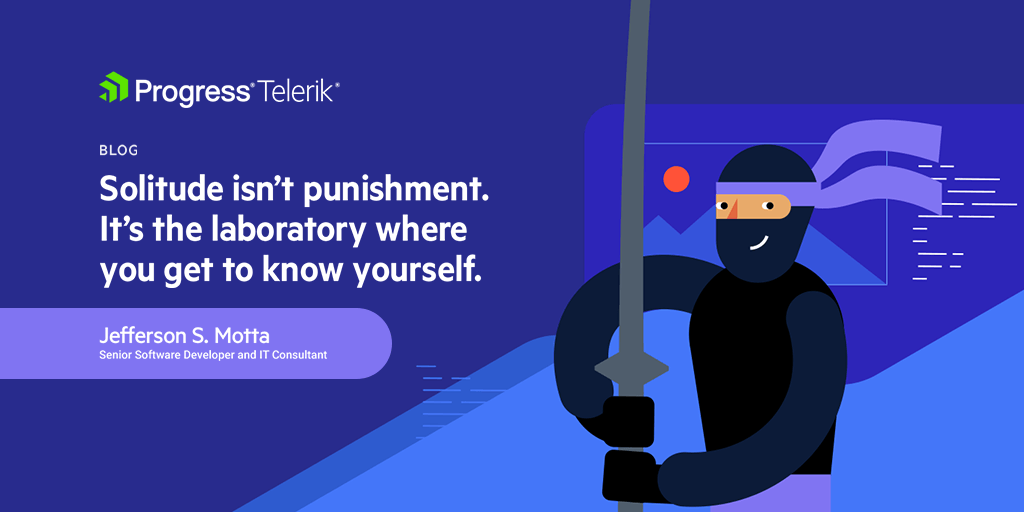
    <content type="text"><![CDATA[<p><span class="featured">One developer shares life lessons gained throughout his career and shares the questions that can help you move ahead.</span></p><p>At 17, I picked up my first book on Neuro-Linguistic Programming (NLP). Not because a mentor recommended it or out of philosophical curiosity, but because I wanted to understand how I worked and what I could become. I found the world meaningless and thought my problems were too big for me to handle. The book introduced me to an idea that seemed too obvious to be true: If you have a problem, you can solve it. Life doesn&rsquo;t hand you burdens you can&rsquo;t carry.</p><p>It took me years to understand what that really meant. And even more years to realize that this lesson wasn&rsquo;t just about fixing code bugs.</p><p>What I&rsquo;m sharing here comes from my personal experience, mistakes included. It might not apply to you, but if even one of these reflections makes you pause and think, it&rsquo;s worth it.</p><h2 id="know-thyself-before-life-forces-you-to">Know Thyself (Before Life Forces You To)</h2><p>&ldquo;Know thyself&rdquo;: Socrates said this millennia ago, but nobody teaches you how to do it in school. And for developers, this self-knowledge isn&rsquo;t a philosophical luxury. It&rsquo;s a survival tool.</p><p>Today, I know what sets me off in a code review. I know how I react when someone questions my architecture. I understand why I prefer working on complex features alone before presenting them to the team. But it took me a long time to get here.</p><p>The problem is that we&rsquo;re several different <em>selves</em>: The developer who defends their technical choices tooth and nail, the team member who needs to compromise in discussions, the professional who accepts projects they don&rsquo;t like to pay the bills, the friend, the son, the father. Each of these selves has its own behavior patterns. And you only discover these patterns by going through experiences, preferably by seeking them out instead of just waiting for them to come.</p><p>Early in my career, conflict situations left me stunned: How can people not see the clarity of my idea, the way I see it? Defending a different technical idea seemed like arrogance. But over time, I learned something counterintuitive: I started to enjoy conflicts. Because it&rsquo;s in friction that you discover what your ideas are really made of. It&rsquo;s when people lose their cool that they show who they are, and so do you.</p><p>But this only makes sense when you know yourself. When you know what your path is.</p><p>And this is work only you can do. There&rsquo;s no YouTube tutorial, no framework. It must come from within.</p><h2 id="some-questions-that-helped-me-and-might-help-you">Some Questions That Helped Me (And Might Help You)</h2><p>Is what I do/work aligned with what I feel?</p><p>Not in the romantic <strong>&ldquo;do what you love&rdquo;</strong> sense, but in the honest sense: Does this move me or anesthetize me?</p><p>Do my opportunities make me grow?</p><p>Or am I just repeating what I already know how to do because it&rsquo;s comfortable?</p><p>What do I have to learn where I am today?</p><p>If the answer is &ldquo;<strong>nothing</strong>,&rdquo; you should have already left.</p><p>An important aside: There&rsquo;s a dangerous belief that &ldquo;doing what you like&rdquo; is a privilege for billionaires. That you need to suffer first, make money later and only then can you afford the luxury of liking what you do. That&rsquo;s a lie.</p><p>The point here is that successful people did do many things they didn&rsquo;t like, yes. But that&rsquo;s not why they succeeded; it&rsquo;s despite it. And curiously, neuroscience shows that doing things you don&rsquo;t like (like washing dishes) strengthens your ability to deal with adversity. Children who have household responsibilities develop greater resilience and entrepreneurial tendencies.</p><p>The point isn&rsquo;t to avoid discomfort. It&rsquo;s knowing why you&rsquo;re doing what you don&rsquo;t like, whether it&rsquo;s a means to a clear end or just an escape from the decision to know yourself.</p><h2 id="solitude-isn’t-the-enemy-it’s-the-laboratory">Solitude Isn&rsquo;t the Enemy (It&rsquo;s the Laboratory)</h2><p>Developers have a strange relationship with solitude. Our profession pushes us toward it, hours in front of the screen, headphones on, immersed in problems that only exist in our heads. And at the same time, they tell us we must be &ldquo;collaborative,&rdquo; &ldquo;work as a team&rdquo; and &ldquo;do pair programming&rdquo; (which, personally, I think is excellent).</p><p>The truth I learned is that any person&rsquo;s life, no matter how social they are, is fundamentally solitary. Nobody&rsquo;s going to be responsible for your commitments, your architecture choices or your career. You must count on yourself most of the time.</p><p>This doesn&rsquo;t mean you don&rsquo;t need friends or a team. It means you need to learn to live with yourself first, and that&rsquo;s a challenge.</p><p>And for developers, this skill is even more valuable. Because developing technically is more about thinking than acting. When you&rsquo;re programming, solving a complex bug or architecting a solution, solitude isn&rsquo;t isolation; it&rsquo;s focus. You don&rsquo;t need constant interaction to deliver. In fact, interruption is often the enemy.</p><p>But, and this is crucial, you can&rsquo;t think everything through alone. A healthy dose of team interaction is necessary. The trick is knowing when to be alone and when to seek others out.</p><p>Things I did to master my relationship with solitude: Going to the movies alone, to restaurants, to concerts. It sounds silly, but it&rsquo;s not. It&rsquo;s about learning to appreciate your own company. It&rsquo;s about creating inner life.</p><p>Artur da T&aacute;vola, a Brazilian thinker, said: &ldquo;Music is inner life, and whoever has inner life will never suffer from loneliness&rdquo; (free translation).</p><p>Quality moments alone, without electronics, without notifications, just you, good music or a good book, make a difference. It&rsquo;s in this silence that you process the day&rsquo;s conflicts, understand why that meeting irritated you, and notice patterns in your behavior.</p><p>Solitude isn&rsquo;t punishment. It&rsquo;s the laboratory where you get to know yourself.</p><p><img src="https://d585tldpucybw.cloudfront.net/sfimages/default-source/.net-maui-aiprompt/quote-jefferson.png?sfvrsn=ca2386d9_2" alt="Solitude isn’t punishment. It’s the laboratory where you get to know yourself." sf-size="100" /></p><h2 id="early-success-the-invisible-trap">Early Success: The Invisible Trap</h2><p>At 21, two years after entering the IT field, I started my own company. Money came fast. A lot of money. It seemed like I had cracked the code of life.</p><p>That success stagnated me.</p><p>Early success is a dangerous drug. It addicts your brain. It fills you with false confidence because you don&rsquo;t yet understand that success has context, timing and luck. You think it was all competence.</p><p>The problem isn&rsquo;t success itself; it&rsquo;s not realizing that the premises that got you there won&rsquo;t be present at the next level. You level up, but want to play with the same strategies.</p><p>I wasn&rsquo;t prepared for the next level of growth. I didn&rsquo;t know how to scale people, processes and complexity. And when a serious accident caused me to stagnate for nearly a decade, I realized I had built castles in the sand.</p><p>It was during this forced pause that I did the best work of my career. I focused on developing a legal system with features nobody else had: a complete change in history, field by field, and thousands of features meticulously thought out in the most minor details. Advocati was considered the best legal software in Brazil in 2007.</p><p>But it took me until 2011 to return strongly to the market.</p><p>Those years taught me something brutal: Enjoy your success, but don&rsquo;t be blinded by it. Don&rsquo;t become arrogant. Lower your expectations that everything will always work out. This gives you a more realistic view.</p><p>I&rsquo;m not saying dream small. Dream big, but take solid, consistent steps. Our lives are increasingly fluid, and constantly changing goals and objectives get you nowhere. Having a fixed target and mapping out the right strategy to reach it, without illusions, is the safest path.</p><p>And there&rsquo;s something else: You&rsquo;ll repeat your mistakes until you learn the lesson. Your life is teaching you something. If you don&rsquo;t understand or don&rsquo;t even realize there&rsquo;s a reason behind your challenge, you&rsquo;ll keep repeating the same cycle.</p><p>Life isn&rsquo;t a game where you pass levels. It&rsquo;s more like debugging as you run the code, see where it breaks, adjust and then rerun it. The problem only disappears when you understand its root cause.</p><h2 id="what-to-do-with-all-this">What to Do With All This?</h2><p>Knowing yourself isn&rsquo;t a destination. It&rsquo;s a daily journey. It&rsquo;s noticing when you&rsquo;re reacting on autopilot. It&rsquo;s questioning why that comment on PR irritated you so much. It&rsquo;s having the courage to be alone with your thoughts. It&rsquo;s celebrating success without thinking you&rsquo;ve become invincible.</p><p>When the next conflict comes, the subsequent failure, the next success, you&rsquo;ll have something most developers never build: clarity about who you are when nobody&rsquo;s watching.</p><p>What I&rsquo;ve shared here comes from decades of learning. Your journey will be different. But if you start getting to know yourself now, maybe you won&rsquo;t have to wait for an accident to learn what took me decades to understand.</p><h2 id="what’s-next-for-me">What&rsquo;s Next for Me?</h2><p>Having learned my lesson, I&rsquo;m always looking for new ways to challenge myself.</p><p>Today I&rsquo;m working on an exciting AI project that&rsquo;s pushing the boundaries of modern development, an intelligent SaaS platform creator powered by natural language prompts. This innovative tool leverages .NET 10 for a robust backend, Microsoft SQL Server for enterprise-grade data management, and React with Next.js on the frontend, all brought together with the rich UI components of the Progress KendoReact library.</p><p>The vision is simple yet powerful: Describe your SaaS platform requirements through prompts and watch as AI transforms your ideas into a fully functional, production-ready application, complete with professional interfaces powered by AI and scalable architecture.</p><p>To validate the project, we&rsquo;re developing and refining it alongside five real-world systems built with this new product.</p><p>And I look forward to learning about myself in the development of this project. </p><p><strong>What&rsquo;s next for you?</strong></p><img src="https://feeds.telerik.com/link/23075/17230781.gif" height="1" width="1"/>]]></content>
  </entry>
  <entry>
    <id>urn:uuid:2b7b4fe8-e841-4586-9a87-04bfbf9b1a8d</id>
    <title type="text">Dealing with Impostor Syndrome as a Web Designer or Dev</title>
    <summary type="text">Ever get the feeling that you’re not good enough to be a designer or developer? This is something called impostor syndrome and it happens to most creative professionals at some point (and, sometimes, many points) over their career. Let’s talk about some ways to beat it.</summary>
    <published>2025-10-29T11:51:21Z</published>
    <updated>2026-07-14T00:19:36Z</updated>
    <author>
      <name>Suzanne Scacca </name>
    </author>
    <link rel="alternate" href="https://feeds.telerik.com/link/23075/17198998/dealing-impostor-syndrome-web-designer-dev"/>
    <content type="text"><![CDATA[<p><span class="featured">Ever get the feeling that you&rsquo;re not good enough to be a designer or developer? This is something called impostor syndrome and it happens to most creative professionals at some point (and, sometimes, many points) over their career. In this post, we&rsquo;ll talk about some ways to beat it.</span></p><p>Whether you just landed your first job as a designer/developer or you&rsquo;ve been working for years, impostor syndrome can hit at any time. All it takes is for just one seed of doubt to be planted before you start wondering, &ldquo;Am I even capable of doing this job? No one thinks I&rsquo;m any good anyway. Maybe I should quit, save them the trouble.&rdquo;</p><p>The problem with impostor syndrome is that it&rsquo;s more than just negative self-talk. If it goes on for long enough, it can cause significant damage to your mental health, relationships and career.</p><p>So, rather than feed into this vicious cycle of tearing yourself down, let&rsquo;s discuss some strategies that can help you get past impostor syndrome.</p><h2 id="what-is-impostor-syndrome">What Is Impostor Syndrome?</h2><p>According to <a target="_blank" href="https://www.mcleanhospital.org/essential/impostor-syndrome">McLean Hospital</a>:</p><blockquote><p>&ldquo;When someone has impostor syndrome, they experience repeated feelings or thoughts that they are incompetent or not good enough, despite evidence to the contrary. These beliefs often have roots in someone&rsquo;s personal history and tend to play out in work, academic, and other high-pressure settings. Unaddressed, they can keep people from enjoying their successes and living life to its full potential.&rdquo;</p></blockquote><p>What do these feelings of insecurity and self-doubt sound like? Here are some examples:</p><ul><li>&ldquo;I&rsquo;m not good enough.&rdquo;</li><li>&ldquo;I don&rsquo;t belong here. Everyone is smarter than me.&rdquo;</li><li>&ldquo;Everything I build is awful.&rdquo;</li><li>&ldquo;I guess I charge &hellip; $12 an hour?&rdquo; (Because you can&rsquo;t imagine anyone paying you a fair wage for your work.)</li><li>&ldquo;I&rsquo;m a complete disaster.&rdquo; (After making a small mistake that no one noticed.)</li><li>&ldquo;I can&rsquo;t ask for help because then they&rsquo;ll realize I don&rsquo;t know anything.&rdquo;</li><li>&ldquo;Any day now they&rsquo;ll figure out I&rsquo;m a fraud.&rdquo;</li><li>&ldquo;[Coworker] always does a better job. They should just give them all the important jobs.&rdquo;</li><li>&ldquo;It didn&rsquo;t have anything to do with me. It was all because of &hellip;&rdquo; (When someone gives you a compliment.)</li><li>&ldquo;Here&rsquo;s the onboarding mockup I created. It&rsquo;s not very good. I&rsquo;m sure you won&rsquo;t like it.&rdquo; (When presenting your work to a client.)</li></ul><p>Impostor syndrome doesn&rsquo;t just manifest itself in the words you speak about yourself or work. It can also create anxiety and depression, lead to insomnia and negatively impact your work performance. In addition, it can burn you out.</p><p>According to the <a target="_blank" href="https://www.apa.org/monitor/2021/06/cover-impostor-phenomenon">American Psychological Association</a> (APA), it can also make people not want to work with you. Not because you&rsquo;re not good at what you do. But because your attitude is draining and they feel like it&rsquo;s impossible to connect with you.</p><p>It&rsquo;s almost as if impostor syndrome becomes a self-fulfilling prophecy. While managers, coworkers and clients may not have had a problem with the quality of your work before, they will once it and your attitude degrade over time.</p><h2 id="how-to-keep-impostor-syndrome-from-getting-in-your-way">How to Keep Impostor Syndrome from Getting in Your Way</h2><p>Starting to feel the side effects of impostor syndrome at work? Here are some things you can do to get it out of your way (and out of your head):</p><h3 id="focus-on-what’s-true-not-on-what-you-feel">1. Focus on What&rsquo;s True, Not on What You Feel</h3><p>Let&rsquo;s take one of the example sentiments from above:</p><blockquote><p>&ldquo;Everything I build is awful.&rdquo;</p></blockquote><p>Let&rsquo;s say this thought keeps crossing your mind every time you turn something into your supervisor or client.</p><p>The first thing to do is to recognize that this is a thought and nothing more. Unless you have a client shouting at you that you are indeed awful every time they see your work, this is your own criticism you&rsquo;re dealing with.</p><p>Next, focus on what&rsquo;s factual:</p><ul><li>What are the five last projects or tasks you completed?</li><li>What was the feedback you received on them from others?</li><li>In the end, was your employer or client satisfied with the end result?</li></ul><p>You can&rsquo;t argue with facts. So, the next time you start with the negative self-talk, call to mind what you&rsquo;ve been working on and how it was received. Actually look at the paper trail from the project to work with facts and don&rsquo;t just recall memories that may be tainted by your feelings.</p><p>Also make note of major wins and write them down somewhere. Positive client testimonials. Referrals from a client you worked closely with. Management congratulating you in front of the team. A bonus at the end of the year. As they stack up, it&rsquo;ll be hard to call yourself an impostor.</p><h3 id="talk-to-someone-you-respect">2. Talk to Someone You Respect</h3><p>If you&rsquo;re seriously doubting the quality of your work, bring it to someone you admire and respect in your field. And avoid sharing it with someone whose opinion you could easily discard, like a loved one. (&ldquo;Oh, they just said that so I wouldn&rsquo;t feel bad.&rdquo;)</p><p>There&rsquo;s no need to share your opinions or criticisms about the work with your peer. Instead, just bring it to them with the hope of getting unbiased feedback, and see what they say.</p><p>To start, if they pay you any compliments, graciously accept them. Remind yourself that they have no reason to lie to you or sugarcoat the truth. They are someone you respect and whose opinion you trust. They get nothing out of lying to you.</p><p>If they give you feedback, remember that feedback does not equal failure. We all get feedback, even when we&rsquo;re experts at the top of our careers. Thank them for their feedback, make note of the input you received and then spend time reviewing it.</p><p>Put aside your negative self-talk and evaluate the feedback against reality. Is it fair? If so, what can you do to address it and improve?</p><p>This is what feedback is for. It helps us better understand our strengths and weaknesses, and to put a plan in place so we can move forward better than before. Not to wallow in perceived criticism.</p><p>This is the difference between an impostor and an expert. The impostor won&rsquo;t know what to do with the feedback or how to grow from it. The expert will. They&rsquo;ll also have the motivation to do so, too.</p><h3 id="ask-your-manager-or-peers-for-support">3. Ask Your Manager or Peers for Support</h3><p>Let&rsquo;s say your feelings of impostor syndrome have come from something that your manager, clients or peers have said to you. This again comes down to whether you&rsquo;ll allow that feedback to fester or to put it to good use.</p><p>For example, let&rsquo;s say that your manager hasn&rsquo;t been pleased with your creation of color palettes. If they haven&rsquo;t given you feedback on how to create them, reach out for support and guidance. Or you can turn to your coworkers for assistance.</p><p>Find out what exactly their expectations or preferences are. Ask about their personal process for crafting color palettes. See if there are specific tools they recommend you use.</p><p>If you&rsquo;re feeling inadequate, don&rsquo;t give up. See if you can get someone to guide you toward a new process or practice.</p><p>On the other hand, let&rsquo;s say your feelings of impostor syndrome have come from something that your manager has said or done, but it wasn&rsquo;t a direct criticism.</p><p>For example, they reassigned one of your tasks to a peer. Do you know for sure why they did it? If you don&rsquo;t, follow up with them and see if they&rsquo;ll give you a reason and some feedback. By actively seeking feedback, you may just discover it was a matter of them better allocating resources versus it being a reflection of the quality of your work.</p><p>Seeking out the truth can always help when impostor syndrome is getting in the way. It&rsquo;ll either let you know that your feelings of self-doubt are unfounded or that you do have some areas where you can improve. You lose nothing by asking for guidance and help, and everything to gain.</p><h3 id="let-go-of-perfectionism">4. Let Go of Perfectionism</h3><p>It&rsquo;s not realistic to seek perfection. Or to wait to turn something in until it&rsquo;s perfect.</p><p>I&rsquo;m not saying that your work should be full of errors or half done. However, if you&rsquo;re waiting to reach that so-called perfect version of a website, app, logo or whatever it is you&rsquo;re building, and then freak out after hitting &ldquo;Send&rdquo; because you realized the font size was slightly off, that&rsquo;s a problem.</p><p>We all make mistakes and there are flaws in a lot of the work we produce for the web. We&rsquo;re human. It&rsquo;s what happens. So long as you&rsquo;re paying attention to your clients&rsquo; needs and preferences, adhering to best practices and web standards, and doing your level best each time, that&rsquo;s all that matters.</p><p>Once you accept this, you&rsquo;ll realize it&rsquo;s not right to put yourself down or abuse yourself for every perceived mistake.</p><p>To reiterate what I mentioned before: If it really bothers you to discover a mistake after turning in your work, make note of it. Is there something you can do next time to avoid it?</p><p>For instance, let&rsquo;s say the font in your contact form doesn&rsquo;t match the font used throughout the Contact page. There&rsquo;s an easy way to address this particular problem in the future: Revise your process. Instead of manually applying font settings as you add new components, employ a global standard and design system that controls the fonts used throughout.</p><p>Let go of this idea of perfection and embrace a mindset of growth and improvement. Find something you don&rsquo;t like about your process or approach to design or development? Fix it. Don&rsquo;t let it become something that contributes to the harmful impostor syndrome growing within you.</p><h3 id="fake-it-until-you-make-it">5. Fake It Until You Make It</h3><p>For this point, I&rsquo;m not encouraging you to sell yourself with lies about your background or what you&rsquo;re capable of. Impostor syndrome relates to feelings of inadequacy when you are already more than adequate, not when you set yourself up for a job you were never a good fit for.</p><p>What I mean by &ldquo;fake it until you make it&rdquo; is faking confidence and satisfaction with your work.</p><p>For example, let&rsquo;s say it&rsquo;s time to present the fintech mobile app you created to the client. Don&rsquo;t present it to them with doubts and negative talk. Instead, take the lead, get excited about the app and show them how amazing it is.</p><p>I used to work in customer service and one of the things they used to teach us was to smile every time we picked up the phone. I know, it sounds silly. It&rsquo;s not like the customer can even see you smile. But there&rsquo;s research that suggests that forcing a smile on your face can actually impact the way you feel and how you carry yourself.</p><p>The same thing can happen when you fake confidence and happiness with your work. By forcing yourself to push the impostor thoughts and statements aside, you get into the habit of reflecting positively on what you do. And once you see that supported by how others react to your work, eventually you&rsquo;ll realize you were never an impostor.</p><p>Another thing to do is catch yourself whenever you use negative words to describe yourself or your work, like &ldquo;I can&rsquo;t,&rdquo; &ldquo;I hate&rdquo; or &ldquo;I won&rsquo;t.&rdquo; Rephrase them using positive words. Even just reframing the situation and your thoughts can have a positive effect on your mindset.</p><p>This can have long-reaching effects on your career, too.</p><p>For instance, once you gain confidence in the everyday tasks you do, you can take things to the next level. With this confidence, you&rsquo;ll be able to take more risks and accept more challenges. And if you&rsquo;re hit with another wave of impostor syndrome, don&rsquo;t sweat it. Even if it doesn&rsquo;t feel right, your mind will eventually catch up with what everyone else already knows and believes about your capabilities.</p><h2 id="wrapping-up">Wrapping Up</h2><p>You are not an impostor. Those feelings and thoughts you&rsquo;re having? Most creatives get them at some point in their career.</p><p>In the beginning, those doubts may come from being a newbie when everyone else around you seems to have it all figured out. It&rsquo;s natural to wonder if you&rsquo;re good enough and how long it&rsquo;ll last as it seems too good to be true.</p><p>What&rsquo;s more, working as a creative is a lot different from, say, an accountant who works with hard facts and numbers. You&rsquo;re coming up with something completely new. While you&rsquo;re building something for a client or employer to use, it all comes from within <em>you</em>. And it can be hard to separate yourself from the outcomes or feedback associated with your work.</p><p>Impostor syndrome is going to happen. What matters is what you do with it.</p><p>I really enjoyed this quote that Dr. Ami Rokach of York University gave to the APA as it shows how impostor syndrome can be turned into a positive:</p><blockquote><p>&ldquo;Impostor phenomenon is a spectrum, not binary. Just as high achievement can fuel impostor phenomenon in self-doubting people, impostor feelings can fuel high achievement, which would enhance one&rsquo;s beliefs in his or her abilities and achievement.&rdquo;</p></blockquote><aside><hr data-sf-ec-immutable="" /><div class="row"><div class="col-4 u-normal-full u-small-mb0"><h4 class="u-fs20 u-fw5 u-lh125 u-mb0">Stop Building Generic Software</h4></div><div class="col-8"><p class="u-fs16 u-mb0"><a target="_blank" href="https://www.telerik.com/blogs/stop-building-generic-software">Stop trying to build</a> what already exists. Start building what sets you apart.</p></div></div></aside><img src="https://feeds.telerik.com/link/23075/17198998.gif" height="1" width="1"/>]]></content>
  </entry>
  <entry>
    <id>urn:uuid:38f53ba3-a15b-43d0-9acd-32e8d21b12b5</id>
    <title type="text">Navigating Turmoil and Chaos at Work Like a Pro</title>
    <summary type="text">Struggling to quiet the chaos around you? These four strategies might help you navigate the turmoil arising inside and outside of your workspace.</summary>
    <published>2025-07-11T15:04:50Z</published>
    <updated>2026-07-14T00:19:36Z</updated>
    <author>
      <name>Suzanne Scacca </name>
    </author>
    <link rel="alternate" href="https://feeds.telerik.com/link/23075/17091333/navigating-turmoil-chaos-work-like-pro"/>
    <content type="text"><![CDATA[<p><span class="featured">Struggling to quiet the chaos around you? These four strategies might help you navigate the turmoil arising inside and outside of your workspace.</span></p><p>Turmoil and chaos can come from anywhere.</p><p>There could be external factors that disrupt the entire world, like lockdowns, recessions and tariffs. There could be factors that impact your work or industry specifically, like the introduction of GDPR, the rise of AI or Google&rsquo;s cookie deprecation announcement. Then there&rsquo;s internal chaos caused by layoffs or reorganizations, public backlash against your brand and even problematic clients.</p><p>How are you expected to thrive, let alone focus, in the midst of such chaos?</p><p>If it feels like you&rsquo;re constantly stressed and struggling to bring order to your workday, this post is for you. We&rsquo;ll look at some strategies you can use to proactively and actively deal with chaos, regardless of where it comes from.</p><h2 id="strategies-for-navigating-turmoil-while-you-work">Strategies for Navigating Turmoil While You Work</h2><p>None of us can predict the future. Which means chaos and turmoil are just a natural part of being human.</p><p>That said, chaos can bring some not so positive outcomes if you get wrapped up in it. If you need help navigating the chaos within or outside your workplace, here are some strategies to help you adapt and overcome it.</p><h3 id="come-up-with-an-action-plan">1. Come Up with an Action Plan</h3><p>According to <a target="_blank" href="https://www.merriam-webster.com/dictionary/chaos">Merriam-Webster</a>, chaos is:</p><blockquote><p>&ldquo;a state of utter confusion&rdquo;</p></blockquote><p>Or:</p><blockquote><p>&ldquo;a confused mass or mixture&rdquo;</p></blockquote><p>Let&rsquo;s assume your workspace isn&rsquo;t burning down and that the chaos you&rsquo;re experiencing (internally or externally) is manageable. Then that&rsquo;s exactly what you need to do. Manage it.</p><p>To be clear: You don&rsquo;t need to solve the problem yourself in order to make the chaos or the effects of it go away. In some cases, that&rsquo;s not even feasible. But let&rsquo;s use an example.</p><p>Your team consists of web designers, web developers, marketers and a project manager. The project manager just up and quit last night. Your team relies on this person to keep the flow of projects moving smoothly and monitors each task and stakeholder to along the way.</p><p>You could ask a project manager from another team to step in, but that doesn&rsquo;t seem fair. They&rsquo;re already stretched thin with their own projects. So, what do you do?</p><p>It&rsquo;s OK to feel stressed. However, you and your team need to find a way to pull everything together until someone steps into the project manager role and takes hold of the reins.</p><p>Working together to come up with an action plan is your best course of action. Here is what it might look like:</p><ul><li>Contact management about the project manager&rsquo;s departure and ask for a plan and timeline for hiring a replacement.</li><li>Schedule a 60-minute team meeting for this morning. Put together an agenda for the call.</li><li>Delegate the project manager&rsquo;s tasks to various team members based on everyone&rsquo;s capacity. Try to distribute the tasks fairly.</li><li>Get access to the project manager&rsquo;s accounts (task management tools, email, etc.) and review what&rsquo;s in there, verifying nothing urgent is waiting on a response.</li><li>Review where each project stands. With the staffing shakeup and additional responsibilities on each person&rsquo;s plate, adjust the timelines as needed.</li></ul><p>Make sure to put your action plan into writing and to formalize it within your workflows and project management tools. Anything that was previously assigned to the project manager will now need to go to the team member in charge of that duty. This will keep everyone&rsquo;s duties straight and hold people accountable to their share of the work.</p><p>By sharing the load with others and coming up with a clear-cut plan, your team will be able to adapt until a better solution comes along. This will prevent people from freezing up, freaking out and throwing your entire organization out of whack.</p><h3 id="focus-on-what-you-can-control">2. Focus on What You Can Control</h3><p>Our bodies are hard-wired to respond to danger and chaos, which can make it difficult to sit still or stay calm. But that&rsquo;s exactly what you need to do in order to get through the situation.</p><p>One technique you can use to stay clear-headed is to focus only on that which you can control.</p><p>For example, let&rsquo;s say that a new international regulation like <a target="_blank" href="https://www.progress.com/blogs/gdpr-eu-personal-data">GDPR</a> or the <a target="_blank" href="https://www.telerik.com/blogs/what-web-developers-designers-need-know-ai-act">AI Act</a> has been announced. Or maybe something is changing with SEO, like <a target="_blank" href="https://www.telerik.com/blogs/what-you-need-know-googles-page-experience-update">the Google Page Experience update</a>.</p><p>In my personal experience, I remember clients panicking over GDPR.</p><p style="margin-left:30px;"><em>What is it?</em></p><p style="margin-left:30px;"><em>Is it only for the EU?</em></p><p style="margin-left:30px;"><em>How will it affect my business?</em></p><p style="margin-left:30px;"><em>Does this mean I can&rsquo;t track data anymore?</em></p><p style="margin-left:30px;"><em>What if I don&rsquo;t know how to add a consent banner to my site?</em></p><p style="margin-left:30px;"><em>What happens if I miss something and I&rsquo;m not compliant?</em></p><p>The first thing you can do in these situations is to educate yourself. If you don&rsquo;t understand what has changed or how the disruption affects your operations, you&rsquo;re either going to freeze up and take no action or panic endlessly, worrying about every possible worst case scenario. Neither of which is good.</p><p>When you have a good grasp of what&rsquo;s happening, focus on what you have control over. To worry about anything else will only exacerbate your stress and make it difficult to get your work done.</p><p>So, let&rsquo;s say there&rsquo;s something like GDPR that&rsquo;s about to go into effect. What should you focus on?</p><p>Start by auditing your own website&rsquo;s data tracking procedures.</p><ul><li>Identify the methods of data collection and the areas of the site where the data is picked up from.</li><li>Review your privacy policy to verify it is transparent about how the data is collected and how it&rsquo;s used.</li><li>Add tasks to your list to create a cookie consent popup notice and to enable opt-in/opt-out settings for your users.</li><li>Revise your internal data collection and management processes as needed.</li></ul><p>Once you&rsquo;ve got a handle on how to deal with the chaos internally, turn your focus outward. Reach out to clients, informing them about the upcoming changes. Provide a recommended course of action along with a price for this data privacy audit/setup service. Then wait for them to respond (if they choose to). That&rsquo;s all you can do.</p><p>Another thing I would suggest is to spend your time wisely. Let&rsquo;s say the chaos doesn&rsquo;t have a direct impact on you. At least, not yet. Take the U.S. tariffs, for example. There&rsquo;s not a whole lot you can do until you see if they have an impact on your business&rsquo;s operations.</p><p>If you find yourself stressing about this possibility, spend your time instead on making things better behind the scenes. Identify obstacles and inefficiencies in your workflows. Come up with ways to streamline things, like unifying your software, implementing AI automation and creating templates.</p><p>Even if the chaos doesn&rsquo;t have a direct impact, it will have motivated you to focus on what you <em>can</em> control and, regardless of what happens, improve your situation.</p><h3 id="know-and-avoid-your-stressors">3. Know and Avoid Your Stressors</h3><p>Navigating stressors and triggers while you&rsquo;re working can be tricky depending on what they are. For instance, let&rsquo;s say you have a coworker or manager who&rsquo;s always wreaking havoc when things are coming down to the wire. So, everyone usually has to stay late to scramble and get the job done. In that case, it&rsquo;s not like you can just avoid that person.</p><p>However, as I mentioned earlier, chaos doesn&rsquo;t always come from inside of one&rsquo;s organization. Let&rsquo;s say it&rsquo;s something bigger that&rsquo;s happening around the world.</p><p>The second someone mentions it or you catch a glimpse of it on social media or your favorite news site, it gets you spiraling. You can&rsquo;t stop talking about it with coworkers or you start endlessly doom-scrolling online. Suddenly, an hour or two passes and you&rsquo;re behind on work.</p><p>It can be tough when you encounter something that triggers this kind of stress-induced response. But you&rsquo;ll need to become more aware of it when and even before it happens.</p><p>To do this, think back to other times you&rsquo;ve felt triggered in a similar way. What caused you to go into distraction or obsession mode? And what pulled you out of it and back into a more productive and healthy frame of mind?</p><p>Start with the causes. What sorts of turmoil and chaos really gets under your skin? Where have you encountered it in the office or online? When possible, remove those sources of stress from your routine. For instance, if TikTok reels have sent you spiraling before, use a distraction-blocking app to prevent you from visiting TikTok during the day.</p><p>Next, look at the ways you&rsquo;ve disrupted those patterns before. Did you step away from a conversation and go for a walk outside? Did you set a timer that pulled you back to your desk and work? Was there something else that helped?</p><p>Lean into your strengths and away from your disruptors. This will help you bring some order out of the chaos and the stress that it brings.</p><h3 id="release-the-negativity-from-your-body">4. Release the Negativity from Your Body</h3><p>Chaos can create a lot of tension within ourselves. Holding onto that tension and discomfort will only prolong the effects that the chaos has on you (even after it&rsquo;s passed).</p><p>Here are some small things you can do to relieve the negative feelings getting stored up in your body and to reset yourself during these chaotic times:</p><p><strong>Smile.</strong><br />I don&rsquo;t mean this in the condescending &ldquo;Why don&rsquo;t you just smile?&rdquo; way. I mean this in the scientific way.</p><p><a target="_blank" href="https://www.nbcnews.com/better/health/smiling-can-trick-your-brain-happiness-boost-your-health-ncna822591">Neurologist Dr. Isha Gupta</a> says that smiling creates a chemical reaction in our brains. Feel-good hormones like dopamine and serotonin are released in the process.</p><blockquote><p>&ldquo;Dopamine increases our feelings of happiness. Serotonin release is associated with reduced stress. Low levels of serotonin are associated with depression and aggression. Low levels of dopamine are also associated with depression.&rdquo;</p></blockquote><p>In customer service, I was always taught that if you force a smile on your face while speaking (even when you&rsquo;re on the phone), it can change how you feel at that moment. Anecdotally speaking, it works. And Dr. Gupta explains why in the quote above.</p><p><strong>Reframe your thoughts.</strong><br />If you find yourself having more and more negative thoughts, try to catch yourself while you&rsquo;re doing it. For instance:</p><blockquote><p>&ldquo;Everyone sucks.&rdquo;</p></blockquote><p>Yep, we&rsquo;ve all been there before. You&rsquo;re feeling overwhelmed and burned out, and there seems to be no end to the chaos or drama. In the moment, it really can feel like you&rsquo;re all alone and everyone does suck.</p><p>But here&rsquo;s the thing: Reframing negative thoughts works similarly to putting a smile on your face. By removing negative thought patterns, you can stop the endless cycle of negative emotions from weighing on you.</p><p>So, when you catch yourself thinking something like the above statement, change it to something more empathetic like:</p><blockquote><p>&ldquo;We&rsquo;re all struggling right now. But we&rsquo;re going to get through this.&rdquo;</p></blockquote><p>Even rewording negative statements like &ldquo;I can&rsquo;t&rdquo; into positive ones forces you to shift your emotional state and way of thinking to a more productive one.</p><p>This doesn&rsquo;t mean you need to say &ldquo;yes&rdquo; to everything thrown your way. It just means finding a healthier way of framing your response like, &ldquo;I would like to help with the website audit. However, I have this load test that Client A has been waiting on for 3 days.&rdquo;</p><p><strong>Collaborate and connect.</strong><br />One of the problems with chaos is that it can throw everything and everyone out of order. It can even force wedges between people. That wedge between you and others doesn&rsquo;t need to be long-lived though.</p><p>So, let&rsquo;s say word has spread that layoffs are coming. This is not the time to isolate yourself from others, be they your coworkers or your loved ones.</p><p>Chaos doesn&rsquo;t just affect your life, it often affects everyone around you. So, when you find yourself in a tumultuous state, reach out and connect with others. Even if it&rsquo;s to send an email to a remote coworker to see how they&rsquo;re doing or to discuss something positive from your lives to take the focus off of what is coming down the line.</p><p><strong>Move your body.</strong><br />During a chaotic time, it&rsquo;s common to find your body has tensed up. It&rsquo;s part of our natural responses as humans.</p><p>According to <a target="_blank" href="https://www.healthline.com/health/tension-in-neck-and-shoulders-from-anxiety#stress-and-tension">this article from Healthline</a>:</p><blockquote><p>&ldquo;When you experience a stressful event or a bout of anxiety, your muscles contract, sometimes forcefully. This is an automatic or reflex reaction. It&rsquo;s known as a stress response or &lsquo;fight or flight&rsquo; response. It&rsquo;s your body&rsquo;s way of gearing up to face a perceived physical threat that you&rsquo;ll need to fight off or run away from.&rdquo;</p></blockquote><p>The problem is, you&rsquo;re not in danger of becoming food for a lion or bear like our long-ago ancestors were (at least I hope not). Yet, your body still responds as if it is. So, you need a way to release that tension so it doesn&rsquo;t stay with you.</p><p>How you move your body is a personal choice. Some people walk out their tension. Others do yoga or pilates. And some hit the gym. Even some light stretching and shaking out your hands and shoulders can be helpful, especially if you don&rsquo;t have time to immediately address how you feel.</p><h2 id="wrapping-up">Wrapping Up</h2><p>Chaos isn&rsquo;t fun. From the rapid onset to the unpredictability of it all, it can feel almost impossible to get a hold on things while it&rsquo;s happening.</p><p>If you don&rsquo;t deal with chaos (or, at least, your response to it) the right way, it can lead to feelings of hopelessness and depression. Inevitably, this will lead to burnout.</p><p>The good news is that you can adapt to chaotic circumstances. By navigating around the chaos, you won&rsquo;t get swept up or feel as though you&rsquo;re drowning in it. And once it passes, you may even come out the other side with a new set of skills and adaptations that build your resilience for whatever the future holds.</p><aside><hr data-sf-ec-immutable="" /><div class="row"><div class="col-4 u-normal-full u-small-mb0"><h4 class="u-fs20 u-fw5 u-lh125 u-mb0">5 Stress-Busting Techniques for 2025</h4></div><div class="col-8"><p class="u-fs16 u-mb0">Only 34% of people working today feel as though they&rsquo;re thriving, which may correlate to the high levels of stress people experience on a regular basis. <a target="_blank" href="https://www.telerik.com/blogs/5-stress-busting-techniques-2025">Learn five science-backed strategies to help reduce stress</a> and bring more calm and enjoyment to your life and work.</p></div></div></aside><img src="https://feeds.telerik.com/link/23075/17091333.gif" height="1" width="1"/>]]></content>
  </entry>
  <entry>
    <id>urn:uuid:c69d629e-adf8-478c-9299-1bec9e0e2caf</id>
    <title type="text">Weather and Other Risks in the Development of Software</title>
    <summary type="text">Learn from one developer’s experiences overcoming natural disasters to survive in a digital world.</summary>
    <published>2025-07-02T16:05:08Z</published>
    <updated>2026-07-14T00:19:36Z</updated>
    <author>
      <name>Jefferson S. Motta </name>
    </author>
    <link rel="alternate" href="https://feeds.telerik.com/link/23075/17067946/weather-other-risks-development-software"/>
    <content type="text"><![CDATA[<p><span class="featured">Learn from one developer&rsquo;s experiences overcoming natural disasters to survive in a digital world.</span></p><p>Environmental disasters threaten physical infrastructure, software development and business continuity in an interconnected digital world.</p><p>In this post, I share my experience with environmental challenges over the last few years and how I have dealt with them. I encourage you to consider these issues in your own life. We can build more resilient software systems that withstand unexpected environmental challenges by learning from our past experiences with power outages, internet disruptions and infrastructure failures.</p><p>In the last 10 years, my region has experienced extreme weather like cyclones and the worst flood in 80 years. The flood left me without internet, electricity or running water for several days.</p><p>Just think of the various natural disasters that could unexpectedly affect us in different areas of the planet&mdash;tsunamis, tornadoes, earthquakes, flooding, etc. Of course these sorts of events can disrupt &ldquo;business as usual.&rdquo; But are there ways to mitigate long-term impacts to economic and social development when disaster strikes? How can we prepare for disaster so that when the urgencies settle down we can function even if it&rsquo;s sub-optimal.</p><h2 id="power-off">Power Off</h2><p>Back in 2019, I had on-premises servers. When an extratropical cyclone hit our area, we were without electricity for five days, and all systems shut down.</p><p>The cloud wasn&rsquo;t so common then, but I migrated my systems to the cloud to avoid future disruptions.</p><p>Then in 2024, there was a severe flood in my state in Brazil, and my office had no electricity for 27 days, while at home I had no running water for 14 days and no internet access. </p><p>We faced complete chaos, not knowing how to deal with the situation or how long it would last, and in the end it was worse than we could have expected. It also affected commerce, disrupting our daily routines while we waited for the water levels to go down. Donations from other Brazilian states and international sources prevented the situation from worsening. Still today, while I write this post in 2025, some people do not have a home to return to after this flood.</p><p>While this was happening, thanks to my experience in 2019, all my business systems were already operating on cloud infrastructure, minimizing the impact on my business. I am grateful I had a USB wireless adapter to connect my PC to the smart phone 5G signal in the midst of all this, so I could work on some projects and do consultancy without too much interference. </p><p>How would you fare if you were without internet? What about power? Do you have ways to maintain your business in case of extenuating circumstances?</p><p>Developing software without internet infrastructure is increasingly challenging, since so many modern activities rely on the internet, with its connected services and servers on cloud or on-premises. I try to keep a copy of my cloud infrastructure (databases and CDNs) so that I can continue working without the internet. But this is not a typical case. I know some systems need a massive infrastructure to operate a single API. You may need offline access to documentation, APIs and other software development infrastructure.</p><h2 id="backup-and-contingency-plan">Backup and Contingency Plan</h2><p>What is your plan if you have a ransomware attack? Ransomware can be compared to the disruption of physical infrastructure or a power outage. And what if your on-premises server goes down? Do you have a copy or systems running on a redundant cloud server like Azure, AWS, Google Cloud or Virtual Private Server (VPS) in a secure location? This scenario has a high cost to maintain and should be less than what you would lose if you lost your data, access and systems.</p><p>Having copies of files is important, but so is knowing the backup&rsquo;s last version and <strong>where</strong> it is stored.</p><p>Below, I suggest a template to register your backup copies:</p><table><thead><tr><th style="width:25%;border-width:1px;border-style:dotted;border-color:#bdbdba;padding:5px;margin:5px;">Date</th><th data-role="resizable" style="width:25%;border-width:1px;border-style:dotted;border-color:#bdbdba;padding:5px;margin:5px;">Coordinator</th><th style="width:25%;border-width:1px;border-style:dotted;border-color:#bdbdba;padding:5px;margin:5px;">Storage name</th><th style="width:25%;border-width:1px;border-style:dotted;border-color:#bdbdba;padding:5px;margin:5px;">Version</th></tr></thead><tbody><tr><td style="width:25%;border-width:1px;border-style:dotted;border-color:#bdbdba;padding:5px;margin:5px;">04-15-2025</td><td style="width:25%;border-width:1px;border-style:dotted;border-color:#bdbdba;padding:5px;margin:5px;">John Doe</td><td style="width:25%;border-width:1px;border-style:dotted;border-color:#bdbdba;padding:5px;margin:5px;">VPS CLOUD XYZ</td><td style="width:25%;border-width:1px;border-style:dotted;border-color:#bdbdba;padding:5px;margin:5px;">1</td></tr><tr><td style="width:25%;border-width:1px;border-style:dotted;border-color:#bdbdba;padding:5px;margin:5px;">04-16-2025</td><td style="width:25%;border-width:1px;border-style:dotted;border-color:#bdbdba;padding:5px;margin:5px;">John Doe</td><td style="width:25%;border-width:1px;border-style:dotted;border-color:#bdbdba;padding:5px;margin:5px;">Server 01</td><td style="width:25%;border-width:1px;border-style:dotted;border-color:#bdbdba;padding:5px;margin:5px;">2</td></tr></tbody></table><br /><h2 id="documentation-and-communication">Documentation and Communication</h2><p>We need a documented guide to restore our systems and services to respond immediately to a critical event. This guide should include a list of services, URLs, users, passwords and how to recover lost credentials. Keep printed versions in multiple physical locations, with clear recovery instructions that your team can easily access and regularly update&mdash;and it must be easy for the recovery team to access.</p><p>Below, I suggest a template to register services to be restored:</p><table><thead><tr><th style="width:20%;border-width:1px;border-style:dotted;border-color:#bdbdba;padding:5px;margin:5px;">Service</th><th style="width:20%;border-width:1px;border-style:dotted;border-color:#bdbdba;padding:5px;margin:5px;">URL</th><th data-role="resizable" style="width:20%;border-width:1px;border-style:dotted;border-color:#bdbdba;padding:5px;margin:5px;">User name</th><th style="width:20%;border-width:1px;border-style:dotted;border-color:#bdbdba;padding:5px;margin:5px;">Password</th><th style="width:20%;border-width:1px;border-style:dotted;border-color:#bdbdba;padding:5px;margin:5px;">Recovery e-mail</th></tr></thead><tbody><tr><td style="width:20%;border-width:1px;border-style:dotted;border-color:#bdbdba;padding:5px;margin:5px;">VPS</td><td style="width:20%;border-width:1px;border-style:dotted;border-color:#bdbdba;padding:5px;margin:5px;">Myvps.com</td><td style="width:20%;border-width:1px;border-style:dotted;border-color:#bdbdba;padding:5px;margin:5px;">VPSUSER</td><td style="width:20%;border-width:1px;border-style:dotted;border-color:#bdbdba;padding:5px;margin:5px;">Pa$$Word</td><td style="width:20%;border-width:1px;border-style:dotted;border-color:#bdbdba;padding:5px;margin:5px;">recover@myvps.com</td></tr></tbody></table><br /><p>To help us be ready, we can learn from chaos engineering:</p><blockquote><p>&ldquo;Chaos engineering can be used to achieve resilience against infrastructure, network, and application failures.&rdquo;</p><br /><p>&mdash; <a target="_blank" href="https://en.wikipedia.org/wiki/Chaos_engineering">https://en.wikipedia.org/wiki/Chaos_engineering</a></p></blockquote><p>This discipline helps us follow the leaders in this technology, like Google and Netflix, to create tools that help us prevent and learn how to deal with disasters. And this is not only in the software category; we can unplug certain services in use and observe how we will deal with them while they are down or what we will do if they fail. I recommend doing this during off-peak hours.</p><h2 id="conclusion">Conclusion</h2><p>Last month, my ISP&rsquo;s cloud servers went down due to a configuration mistake. So, I learned something new: I need a second cloud to substitute and a development environment with tags/constants <strong>OFF_LINE</strong> to continue working. This is a journey of learning through experience. There&rsquo;s no one-size-fits-all solution for addressing these challenges.</p><p>Sample of OFF_LINE constant in Visual Studio projects:</p><p><img src="https://d585tldpucybw.cloudfront.net/sfimages/default-source/blogs/2025/2025-06/offline-config-manager.png?sfvrsn=68e841f2_2" alt="Configuration Manager - OFFLINE" /><br /><span style="font-size:14px;">OFF_LINE constant in Visual Studio</span></p><p>The important thing is to learn from the experience, avoid new risks in the future and keep your business running smoothly. I was lucky to pass these events one at a time, and I hope you can learn from my shared experiences too.</p><aside><hr data-sf-ec-immutable="" /><div class="row"><div class="col-4 u-normal-full u-small-mb0"><h4 class="u-fs20 u-fw5 u-lh125 u-mb0">Why Obey Programming Rules and New Coding Trends</h4></div><div class="col-8"><p class="u-fs16 u-mb0">In a field as dynamic as development, <a target="_blank" href="https://www.telerik.com/blogs/why-obey-programming-rules-new-coding-trends">staying up to date on the latest best practices</a> and trends can take effort. But keeping pace is easier than a massive overhaul later.</p></div></div></aside><img src="https://feeds.telerik.com/link/23075/17067946.gif" height="1" width="1"/>]]></content>
  </entry>
  <entry>
    <id>urn:uuid:4e35ac98-5fac-4c55-a33b-a05fbce7bf79</id>
    <title type="text">Building Psychology Role Models from Personas to Build Better Software</title>
    <summary type="text">Creating role models in your mind can help you consider your digital product from new angles to better serve users.</summary>
    <published>2025-06-13T14:15:00Z</published>
    <updated>2026-07-14T00:19:36Z</updated>
    <author>
      <name>Jefferson S. Motta </name>
    </author>
    <link rel="alternate" href="https://feeds.telerik.com/link/23075/17051132/building-psychology-role-models-personas-build-better-software"/>
    <content type="text"><![CDATA[<p><span class="featured">Creating role models in your mind can help you consider your digital product from new angles to better serve users.</span></p><p><img src="https://d585tldpucybw.cloudfront.net/sfimages/default-source/blogs/2025/2025-01/mental-model.jpg?sfvrsn=294d6df1_2" alt="A panel of humans sits behind a sleeping robot, whose dream is a balloon filled with gears" /><br /><span style="font-size:11px;">Image from Microsoft Copilot prompt</span></p><p>In this post, I&rsquo;ll discuss my experience building personas for my products and extending those personas to role models. Personas are a psychological term that describes how we construct mental profiles of individuals in our minds with their personalities. The role models are archetypal ideals that complement and motivate particular personas. Role models go beyond individuals to provide a methodical framework for understanding actions, motives and decisions.</p><p>When we develop a product, we need to create a target public and build a persona. The persona is made by giving an imaginary person an age, a gender and social and economic circumstances. We can create some personas to start selling our products and/or services to these personas. This is a marketing strategy.</p><p>While building software, I design mainly for the specific model of public lawyers. I have a business that produces software for law companies that could cause harmful consequences if the software fails, including millions of dollars in potential loss from lawsuits.</p><p>I&rsquo;ll explain how I use persona models during development of such software. It is a mental exercise you might already be familiar with.</p><p>What goes on in the developer&rsquo;s mind while coding?</p><ol><li>It starts with the language programming role model. We imagine how the machine will process our code and how to get it to correctly accomplish the requirements. We have the grammar and lexical logic of the programming in mind.</li><li>Secondly, we imagine the solution&rsquo;s environments, whether it works on desktop, web, server-side, API, cloud, etc., and how it will work in production.</li><li>After that, we imagine how the data produced will be processed and consumed as a user interface or API and how the software will act in the natural environment.</li></ol><p>Most of our developers are good at these three steps, but there are others to consider.</p><p>I use the following steps to help me finish my work and avoid problems. I build role models of different types of users: a user who knows nothing about IT, a user who doesn&rsquo;t like IT and a user who hates IT and/or is lazy.</p><p>So, I &ldquo;load&rdquo; these role models into my mind and start thinking about them one by one while using my interfaces, mimicking the behavior of the current role model and asking myself, as a developer/UX professional, what I could do better to help this role model finish their task successfully. Likewise, you can &ldquo;talk&rdquo; with your role model as a real person&mdash;ask a question from yourself as the developer and answer as the persona you have in mind. With time, they will start giving you feedback and ideas like a real person. This is the magic of the role models.</p><p>Creating role models from scratch is hard, so you can base them on people you already know. It&rsquo;s valid to create one from your aunt who hates technology, and perhaps one based on a coworker who loves it. From there, you can play around with the picture you have of them in your mind. Maybe your model is less clever or has stronger opinions about a particular aspect. Establish a clear idea of your personas before moving on.</p><h2 id="next-steps">Next Steps</h2><p>Next, consider these areas of UI from the perspective of each of your personas:</p><ol><li>What will the end user understand from the interface? It would help if you guided them in considering what they need to do in order to perform the task correctly. Ask your role model in your mind.</li><li>It would help if you imagined what the role model would understand about the forms&rsquo; error validation messages, tips and labels&mdash;the big picture and the details.</li><li>You need to imagine the user&rsquo;s attitude toward accomplishing the task. Will they tap/click the right button and do it in the correct sequence?</li></ol><p>Is this enough? I often imagine the worst-case consequences in the work I do, like someone losing something because of my software and as a result pursuing legal action against me.</p><p>I even go so far as to imagine myself giving testimonial to a judge. I want to feel with certainty that I have done everything with care.&nbsp;As I said before, this line of thinking has caused me to discontinue development of some software services because there was a high possibility of unpredictable errors, putting the customer at too much risk.</p><p>But sometimes we need to deliver an MVP or finish development and we aren&rsquo;t the final decision-makers. So, what do I do if I see that a bad situation could happen? I pass along two options to solve the problem to the owners and/or stockholders so they can consider the best solution.</p><p>In development, we can make documentation on the Git commits and write comments about our concerns. But, please, be careful not to leave incriminating comments. Noting concerns in the code can help the following colleagues find a solution.</p><h2 id="conclusion">Conclusion</h2><p>I&rsquo;ve been using this role model approach to develop and validate my software for a long time. At first, I didn&rsquo;t know the name for it, or that I was using the psychology role model, only discovering it in my postgraduate studies in neuroscience.</p><p>Building a persona is not enough. You need to recreate the minds of your audience and help them accomplish their tasks without suffering or avoiding errors, leading them to success with your solution.</p><hr /><p><span style="font-size:14px;">The information provided on this blog does not, and is not intended to, constitute legal advice. Any reader who needs legal advice should contact their counsel to obtain advice with respect to any particular legal matter. No reader, user or browser of this content should act or refrain from acting on the basis of information herein without first seeking legal advice from counsel in their relevant jurisdiction.</span></p><img src="https://feeds.telerik.com/link/23075/17051132.gif" height="1" width="1"/>]]></content>
  </entry>
  <entry>
    <id>urn:uuid:3b91865f-0824-486b-8f7d-bd7dd64cbd1c</id>
    <title type="text">What Are Your Values and Principles? And Why Do They Matter?</title>
    <summary type="text">What sorts of values do you live by? What’s more, how can you use these personal values to improve the quality of your work as well as your satisfaction with your job? Let’s dig into this topic and see what having a clearly defined set of values and principles can do for you.</summary>
    <published>2025-04-17T10:50:44Z</published>
    <updated>2026-07-14T00:19:36Z</updated>
    <author>
      <name>Suzanne Scacca </name>
    </author>
    <link rel="alternate" href="https://feeds.telerik.com/link/23075/17008998/what-your-values-principles-why-matter"/>
    <content type="text"><![CDATA[<p><span class="featured">What sorts of values do you live by? What&rsquo;s more, how can you use these personal values to improve the quality of your work as well as your satisfaction with your job? Let&rsquo;s dig into this topic and see what having a clearly defined set of values and principles can do for you.</span></p><p>If you&rsquo;ve ever felt lost in your career or frustrated with the work you&rsquo;re doing, it may be because it&rsquo;s out of alignment with your personal values.</p><p>Core values are often touted by organizations on their About pages and in their employee manuals. These values tell the world &ldquo;This is what we stand for!&rdquo; Truth. Integrity. Dependability. Diversity. Innovation. These are all examples of core company values.</p><p>But what about you? Whether you&rsquo;re a freelancer or employed, finding out what matters most to you and what drives you can be extremely beneficial in your personal and professional life.</p><p>If you&rsquo;ve been feeling stuck, frustrated or aimless recently, working out what your values are may help. In this post, we&rsquo;ll look at what personal values are, how to find out what yours are and how to turn them into principles that guide your professional decisions going forward.</p><h2 id="core-values-and-why-they-matter">Core Values and Why They Matter</h2><p>Values are the characteristics or ideals that a person or organization aims to live by and prioritizes above all else. Here are some examples of personal and professional values you might have or encounter in others:</p><ul><li>Adaptability</li><li>Community</li><li>Compassion</li><li>Courage</li><li>Courtesy</li><li>Craftsmanship</li><li>Curiosity</li><li>Discipline</li><li>Health</li><li>Independence</li><li>Loyalty</li><li>Optimism</li><li>Self-respect</li><li>Sustainability</li><li>Teamwork</li></ul><p>When you start working for someone, they may give you a rundown on the company&rsquo;s mission, vision and core values. This isn&rsquo;t because they want to brag about what amazing work they&rsquo;re doing or what good people they are.</p><p>A well-defined set of values allows a company and its employees or contractors to get on the same page about what matters most. It also makes decision-making much easier as values and the driving principles derived from them remove most questions about how you&rsquo;re supposed to act or what you&rsquo;re supposed to do.</p><p>For example, let&rsquo;s say that <strong>discipline</strong>, <strong>innovation</strong> and <strong>gratitude</strong> are a company&rsquo;s three core values. Here&rsquo;s how those values might be translated into principles that guide the day-to-day operation of a company:</p><p style="margin-left:30px;"><strong>We Value Discipline:</strong> Our clients aren&rsquo;t going to be content with getting their SEO audit and recommendations whenever it&rsquo;s most convenient for <em>us</em>. Nor should they be. The second the ink dries on the contract, we get to work. We understand that time is of the essence when it comes to SEO and that our clients have no time to waste. And so we won&rsquo;t. Every deadline promised will be met and the task completed in full.</p><p style="margin-left:30px;"><strong>We Value Innovation:</strong> We don&rsquo;t want or like to rest on our laurels. What has worked for us for five years might be just fine, but we know that there&rsquo;s always more we can do to be better&mdash;to create a better dining experience for our customers, to create a culture that makes employees feel like family and to drive company growth farther than ever. As such, we fully embrace innovation and we aren&rsquo;t afraid of change.</p><p style="margin-left:30px;"><strong>We Value Gratitude:</strong> We have been in business since 2009 and we&rsquo;ve been rated Austin&rsquo;s #1 car wash since 2018. We recognize that none of this would&rsquo;ve been possible without our rock star team of employees. As a token of our appreciation and in recognition of their hard work, we issue performance-based bonuses every quarter and offer various means of career advancement.</p><p>As you can see, when values get turned into principles, there&rsquo;s clearer guidance for everyone involved. Principles effectively take a value and translate it into what actions you&rsquo;ll take to uphold that value.</p><p>For instance, a company that values innovation would never encourage employees (or even hire ones to begin with) who take shortcuts. Nor would they want employees to stop short simply because the competition doesn&rsquo;t go above and beyond.</p><p>Values-based principles are also a great way to differentiate oneself from the competition. Whether a company is looking to close more business or to woo employees away from competitors, having clear values and principles laid out like this can be a huge advantage.</p><h2 id="examples-of-company-values">Examples of Company Values</h2><p>Let&rsquo;s have a look at some real world examples of &ldquo;Our Values&rdquo; pages so you can get a sense for what kinds of values different companies uphold and how it works to their, their employees&rsquo; and their end users&rsquo; advantage:</p><h3 id="chick-fil-a-values">Chick-Fil-A Values</h3><p>On the <a target="_blank" href="https://www.chick-fil-a.com/careers/culture">Chick-Fil-A company culture page</a>, the company espouses the following values:</p><ul><li>Service</li><li>Cooperation</li><li>Impactfulness</li><li>Adaptation</li></ul><p><img src="https://d585tldpucybw.cloudfront.net/sfimages/default-source/blogs/2025/2025-04/chick-fil-a-values.png?sfvrsn=e4cf8072_2" title="Chick-Fil-A values" alt="On the Culture page of the Chick-Fil-A website, the company lists 4 values: “We’re here to serve”, “We’re better together”, “We are purpose-driven”, and “We pursue what’s next”." /></p><p>As you can see, the website doesn&rsquo;t phrase the values in such a way. Instead, they&rsquo;re phrased in more relatable and motivational terms like &ldquo;We&rsquo;re here to serve&rdquo; and &ldquo;We&rsquo;re better together.&rdquo;</p><h3 id="mayo-clinic-values">Mayo Clinic Values</h3><p>What&rsquo;s interesting about <a target="_blank" href="https://www.mayoclinic.org/about-mayo-clinic/mission-values">Mayo Clinic&rsquo;s values</a> is that it all starts with one core institutional value that puts the needs of the patients before everything else. The organization has then established a lengthy list of values and traits that support this overarching value, which includes:</p><ul><li>Respect</li><li>Integrity</li><li>Compassion</li><li>Healing</li><li>Teamwork</li><li>Innovation</li><li>Excellence</li><li>Stewardship</li></ul><p><img src="https://d585tldpucybw.cloudfront.net/sfimages/default-source/blogs/2025/2025-04/mayo-clinic-values.png?sfvrsn=1c769c10_2" title="Mayo Clinic values" alt="A screenshot from the Mayo Clinic “Mission and values” page that list out the eight values that support the organization’s mission to priority the needs of the patient." /></p><p>What&rsquo;s great about the way this one is set up is that, even though they might have a disparate set of values, there&rsquo;s a simple explanation for how they fit together. It&rsquo;s all about the patients&rsquo; needs. Without these values, the Mayo Clinic wouldn&rsquo;t be able to meet or exceed them.</p><h3 id="haddad-brands-values">Haddad Brands Values</h3><p><a target="_blank" href="https://haddad.com/page/our-values">Haddad Brands</a> is the parent company for well-known brands like Converse, Nike, Ralph Lauren and Huggies.</p><p>They&rsquo;ve created an acronym for their brands: CAN DO ATTUDE. It stands for:</p><ul><li><strong>C</strong>ollaboration builds teamwork</li><li><strong>A</strong>ttitude is everything</li><li><strong>N</strong>o is not in our vocabulary</li><li><strong>D</strong>o the right thing</li><li><strong>O</strong>bsess relationships</li><li><strong>A</strong>lways be humble, yet confident</li><li><strong>T</strong>hrough perseverance comes success</li><li><strong>T</strong>hank you goes a long way</li><li><strong>U</strong>nderstand &amp; appreciate differences</li><li><strong>D</strong>on&rsquo;t forget to have fun</li><li><strong>E</strong>xecution is everything</li></ul><p><img src="https://d585tldpucybw.cloudfront.net/sfimages/default-source/blogs/2025/2025-04/haddad-brands-values.png?sfvrsn=9bed1bdd_2" title="Haddad Brands values acronym" alt="On the Haddad Brands “Our Values” page, there are red cards that represent each of the company&#39;s values. They spell out the acronym: CAN DO ATTUDE." /></p><p>While many companies keep their values list to a manageable number&mdash;usually between three and five&mdash;Haddad Brands has 11. The acronym is a good way to help employees (and even customers) remember what they are.</p><h3 id="spinutech-values">Spinutech Values</h3><p><a target="_blank" href="https://www.spinutech.com/about/values/">Spinutech</a> is a digital agency with four core values:</p><ul><li>&ldquo;We get better every day&rdquo; (continuous growth)</li><li>&ldquo;We do the right thing&rdquo; (integrity)</li><li>&ldquo;We over me&rdquo; (teamwork)</li><li>&ldquo;We own it&rdquo; (personal accountability)</li></ul><p><img src="https://d585tldpucybw.cloudfront.net/sfimages/default-source/blogs/2025/2025-04/spinutech-values.png?sfvrsn=380b9cbe_2" title="Spinutech values" alt="On the “Our Values” page of the Spinutech site, there’s an image beside the “We Do the Right Thing” value. In the photo, there’s a woman working behind a computer in an office. Behind here is a grey wall with orange and white lettering on it. The words spell out the company’s values." /></p><p>These aren&rsquo;t just catchphrases that appear on the agency&rsquo;s website. As you can see in this photo from the page, the values are written on the walls behind the employees as they work.</p><h3 id="progress-values">Progress Values</h3><p>Progress has its own set of values as well&mdash;<a target="_blank" href="https://www.progress.com/company">ProgressPROUD</a>. In total, there are five values that Progress holds near and dear:</p><ul><li><strong>P</strong>rogress collaboratively</li><li><strong>R</strong>espect differences</li><li><strong>O</strong>wn our tomorrow, today</li><li><strong>U</strong>phold trust</li><li><strong>D</strong>are to innovate</li></ul><p><img src="https://d585tldpucybw.cloudfront.net/sfimages/default-source/blogs/2025/2025-04/progress-values.png?sfvrsn=2afc7169_2" title="ProgressPROUD values" alt="On Progress’s Company page, visitors will find five values outlined that spell out the acronym P-R-O-U-D." /></p><p>Not only do these values make internal decision-making simpler, they also inspire the team as they work on building technologies that transform digital experience design.</p><h2 id="how-to-find-out-what-your-values-are">How to Find Out What Your Values Are</h2><p>If you&rsquo;ve never considered what your values are before, there are some simple ways to discover them now.</p><p>For starters, look back on your life and ask yourself:</p><p style="margin-left:30px;">What have been your proudest moments? Why?</p><p style="margin-left:30px;">Also, was there something about you or the people you were with that made you feel proud?</p><p>For example, let&rsquo;s say there was a major storm in your area like a hurricane or tornado. Not only had you and your family planned well in advance for it by stocking up on supplies and fueling your car, you managed to get out of town in time. While it was inconvenient, you were able to work from a hotel for a few days while the storm debris was cleared out and power was restored.</p><p>From that, you could infer that you value qualities like organization and resiliency.</p><p>Another thing you could do is look at your biggest sources of inspiration. For instance, they could be family members, friends, famous people, teachers or others.</p><p>As you reflect on those whom you admire, are there certain traits they share? Do you possess those traits as well or wish you had them? You may have found some more core values right there.</p><p>One last thing you could do is to look at what frustrates or angers you. Essentially, what is it about others that you dislike and deem wrong or unethical?</p><p>For this, you might look at your worst employment experience. Perhaps you had a boss who played favorites and was unfair. Or there was a coworker who never carried their share of the load and was always late.</p><p>By examining the flaws in character that upset you, you&rsquo;ll discover more about what you stand for and what kind of person you want to be in life as well as at your job.</p><h2 id="the-benefits-of-defining-your-own-values">The Benefits of Defining Your Own Values</h2><p>Just because your employer or client has established what&rsquo;s most important in the running of their organization, that doesn&rsquo;t mean it&rsquo;s not worth it to define your own values.</p><p>Sure, if you agree to work for them, you&rsquo;ll need to abide by their core values. But before you get to that point, ask yourself:</p><p style="margin-left:30px;">Do you even want to work for a company whose values are misaligned with your own?</p><p>That&rsquo;s just one reason why you should figure out what matters most to you.</p><p>Values and principles aren&rsquo;t just for enterprises and other companies. Here are some other reasons why it&rsquo;s beneficial to come up with values that matter personally to you:</p><ul><li>You get to create the rulebook for how you live your life, which will give it more meaning.</li><li>You&rsquo;ll find greater job satisfaction and fulfillment if you choose employers or clients with similar values and motivations.</li><li>You&rsquo;ll find that the work you do turns out better as you&rsquo;re motivated by greater ideals than just turning a profit.</li><li>When prospective employers or collaborators ask who you are, you can confidently speak about what you stand for and why.</li><li>Having a core set of values will make you much more reliable and authentic, which will help you build stronger relationships and greater job stability.</li><li>If you ever feel lost in terms of what to do next with your life or work, your values can help guide you.</li></ul><p>Whether you&rsquo;re looking to achieve greater success or be happier with your life, establishing these fundamental values will help.</p><aside><hr data-sf-ec-immutable="" /><div class="row"><div class="col-4 u-normal-full u-small-mb0"><h4 class="u-fs20 u-fw5 u-lh125 u-mb0">5 Stress-Busting Techniques for 2025</h4></div><div class="col-8"><p class="u-fs16 u-mb0">Only 34% of people working today feel as though they&rsquo;re thriving, which may correlate to the high levels of stress people experience on a regular basis. <a target="_blank" href="https://www.telerik.com/blogs/5-stress-busting-techniques-2025">Learn five science-backed strategies to help reduce stress</a> and bring more calm and enjoyment to your life and work.</p></div></div></aside><img src="https://feeds.telerik.com/link/23075/17008998.gif" height="1" width="1"/>]]></content>
  </entry>
  <entry>
    <id>urn:uuid:761cf742-3afe-4145-a8d0-80400f5a3930</id>
    <title type="text">Welcome Progress Champions for 2025</title>
    <summary type="text">Welcoming folks as Progress Champions for 2025 — a unified program to recognize and honor our friends in the developer community.</summary>
    <published>2025-02-18T16:25:54Z</published>
    <updated>2026-07-14T00:19:36Z</updated>
    <author>
      <name>Sam Basu </name>
    </author>
    <link rel="alternate" href="https://feeds.telerik.com/link/23075/16965130/welcome-progress-champions-2025"/>
    <content type="text"><![CDATA[<p><span class="featured">Welcoming folks as Progress Champions for 2025&mdash;a unified program to recognize and honor our friends in the developer community.</span></p><p>The <a target="_blank" href="https://www.progress.com/champions">Progress Champions</a> program is a recognition for the best in our software industry&mdash;for developers, designers, architects, advocates, partners and forward thinkers. We&rsquo;ve transformed our individual offerings into a unified Champions program&mdash;this allows us to create stronger, more impactful presence within the developer community. We&rsquo;ve started off with Developer Tools and Sitefinity, with the ultimate goal to include the entire portfolio of Progress products&mdash;MOVEit joins us in 2025. This will be an annual honor program with year-end nominations, evaluations in November/December and inductions/renewals in January/February.</p><p><img src="https://d585tldpucybw.cloudfront.net/sfimages/default-source/announcements-1/championslogo905ad23d-e109-4192-a5ec-8247529bbc6d.png?sfvrsn=e0f8a4c3_1" alt="Progress Champions badge" sf-size="100" /></p><h2 id="toc_1">Renewed Champions</h2><p>Progress Software has a big portfolio of products&mdash;but modern developers often relate to Progress for a collection of UI component suites, frameworks and tools. This we collectively call Developer Tools&mdash;it includes Telerik UI suites for all things .NET, Kendo UI suites for all things JavaScript, reporting products, testing solutions, design/UX utilities, network debugging with Fiddler and other developer productivity tools.</p><img src="https://d585tldpucybw.cloudfront.net/sfimages/default-source/announcements-1/devtoolsbadges.png?sfvrsn=eb7f0c5_1" alt="Badges for Progress Telerik Champion, Progress Kendo UI Champion and Progress Fiddler Champion" sf-size="100" /><p>Developers learn from each other&rsquo;s experiences, and it&rsquo;s easy to share a love for tooling that makes developers more productive. Progress has always recognized and honored outstanding folks in the software community&mdash;influencers who lead with success, share knowledge and drive the developer community forward with empathy. We&rsquo;re glad to renew this year&rsquo;s group of Progress Champions in the Developer Tools space&mdash;you&rsquo;re all awesome and we&rsquo;re glad to have you as friends.</p><ul><li>Joseph Guadagno | US</li><li>Dan Siegel | Honduras</li><li>Layla Porter | UK</li><li>Chris Sainty | UK</li><li>Chris Gardner | US</li><li>Carey Payette | US</li><li>Leomaris Reyes | Dominican Republic</li><li>Chen Weizhi | Singapore</li><li>Daniel Hindrikes | Sweden</li><li>Jefferson S. Motta | Brazil</li><li>Jimmy Engstrom | Sweden</li><li>Eric Johansson | Sweden</li><li>Dhananjay Kumar | India</li><li>Chris DeMars | US</li><li>Jessica Engstrom | Sweden</li><li>John Bristowe | Australia</li><li>Dany Paredes | Spain</li><li>Robert Boedigheimer | US</li></ul><h2 id="toc_2">New Champions</h2><p>Developer technologies like .NET/JS evolve fast. Some thrive in the challenges and inspire others to be successful. We&rsquo;re delighted to bring on board several new Progress Champions for 2025. They come from around the world with strong developer backgrounds and freely share their passion for technology, in addition to love for Telerik/Kendo UI products. A very warm welcome to our exceptional developer friends.</p><p><img src="https://d585tldpucybw.cloudfront.net/sfimages/default-source/announcements-1/devchampions.png?sfvrsn=facdb4e5_1" alt="Progress Champions: Hector Perez, Peter Vogel, Egil Hansen, Hassan Djirdeh" sf-size="100" /></p><p>Modern web, mobile and desktop apps often strive for delightful UX, and beautifully styled UI design is one way to achieve the goal. However, there has traditionally been some friction in the designer-developer handoff workflows&mdash;it helps to understand some basic tenets of good UX and designing software. We're delighted to welcome some wonderful folks from the design/UX worlds&mdash;let there be light.</p><p><img src="https://d585tldpucybw.cloudfront.net/sfimages/default-source/announcements-1/uxchampions.png?sfvrsn=693b11d0_1" alt="Progress Champions: Dean Schuster, Jennifer Wadella, Teon Beijl" sf-size="100" /></p><blockquote>And congratulations to the <a href="https://www.progress.com/blogs/welcoming-progress-sitefinity-champions-2025" target="_blank">Progress Sitefinity Champions, named on the Progress.com blog</a>.</blockquote><h2 id="toc_3">Rewards</h2><p>Progress Champions represent the very best in our community. Their commitment to excellence and collaboration is what moves us forward, and we are proud to be a part of their journey toward continued success. Like with most honor programs, we recognize all that Progress Champions do and lead with empathy, but we also have a few expectations&mdash;most Champions will easily go above and beyond.</p><p>Progress Champions are awesome, deserving of our unending love and adoration&mdash;and a few tangible benefits. We celebrate our Progress Champions with a range of exclusive perks and value our continued collaboration.</p><ul><li>Digital Progress Champions badge for web/signature use</li><li>Corresponding physical die-cut stickers</li><li>Custom designed gift with corresponding badge</li><li>Perpetual crystal trophy | Annual plaques each year</li><li>Access to Dev Advocates/PMs/Engineering through Slack channel </li><li>Early insight into Progress product strategy &amp; roadmaps </li><li>Opportunities for beta product testing &amp; feedback</li><li>Invitation to Progress Appreciation Summit
        <ul><li>Annual/quarterly virtual meetups</li><li>Broader strategies &amp; industry insights from Progress leadership</li><li>Product feedback sessions</li></ul></li><li>Invitation to submit to speak at Progress events around the globe
        <ul><li>DevReach/ProgressNext/Meetups/Partner Summits</li></ul></li><li>Social media promotion | Profile on Progress Champions website</li><li>Press release &amp; community livestreams showcasing Progress Champions</li><li>Telerik &amp; Kendo UI Annual Licenses with Lite Support</li><li>Fiddler Everywhere annual subscription</li><li>Our love &amp; respect</li></ul><h2 id="toc_4">Come Join</h2><p>The Progress Champions program showcases excellence in the developer community and the passion to educate others to be more successful. If you work with Progress technologies, we appreciate the partnership. If you are passionate about Telerik UI suites for all things .NET, Kendo UI suites for all things JavaScript, reporting suites, testing solutions, design utilities, network debugging with Fiddler or other developer productivity tools from Progress Software, we want to know. Know someone else who would be great fit to be a Progress Champion&mdash;we&rsquo;re all ears. Nominations are open year-round. Evaluations will be in November/December 2025 for the next calendar year&mdash;we want to see your names.</p><p>Want to know more about the program? Drop us a line at <a href="https://www.telerik.commailto:champions@progress.com" target="_blank">champions@progress.com</a>.</p><p>Upwards and onwards with Progress Champions&mdash;cheers.</p><img src="https://feeds.telerik.com/link/23075/16965130.gif" height="1" width="1"/>]]></content>
  </entry>
  <entry>
    <id>urn:uuid:8361aecd-91a7-4edb-b8a5-5d5a50d95a64</id>
    <title type="text">5 Stress-Busting Techniques for 2025</title>
    <summary type="text">Only 34% of people working today feel as though they’re thriving, which may correlate to the high levels of stress people experience on a regular basis. Learn five science-backed strategies to help reduce stress and bring more calm and enjoyment to your life and work.</summary>
    <published>2025-01-30T15:10:54Z</published>
    <updated>2026-07-14T00:19:36Z</updated>
    <author>
      <name>Suzanne Scacca </name>
    </author>
    <link rel="alternate" href="https://feeds.telerik.com/link/23075/16951733/5-stress-busting-techniques-2025"/>
    <content type="text"><![CDATA[<p><span class="featured">Only 34% of people working today feel as though they&rsquo;re thriving, which may correlate to the high levels of stress people experience on a regular basis. Learn five science-backed strategies to help reduce stress and bring more calm and enjoyment to your life and work.</span></p><p>According to a <a target="_blank" href="https://business.talkspace.com/articles/the-negative-effects-of-stress-in-the-workplace">Talkspace business article</a>, stress can have a huge impact on your work. For example, here are some of the common side effects:</p><ul><li>Burnout</li><li>Demotivation</li><li>Lack of job satisfaction</li><li>Physical health issues</li><li>Mental health problems</li><li>Lowered productivity</li><li>Increased absenteeism</li><li>Greater interpersonal conflicts</li></ul><p>Whether that stress comes from the job itself, your workplace, personal life or the general state of the world, it&rsquo;s going to have far-reaching effects on your life and work. That&rsquo;s especially so the longer it goes on for.</p><p>In this post, we&rsquo;ll examine the toll that long-term stress takes on our bodies and minds as well as five science-backed, stress-busting techniques you can try.</p><h2 id="is-stress-affecting-your-work">Is Stress Affecting Your Work?</h2><p><a target="_blank" href="https://www.gallup.com/workplace/349484/state-of-the-global-workplace.aspx">A Gallup poll done in 2023</a> found that only 34% of workers felt as though they were thriving in their lives.</p><p>High levels of stress could be to blame. According to <a target="_blank" href="https://www.stress.org/what-is-stress/">the American Institute of Stress</a>:</p><blockquote><p>&ldquo;Prolonged stress poses risks for various mental health challenges, heightens sensitivity to daily stressors, <strong>affects overall life outlook and goals</strong> and impacts the body&rsquo;s physiological stress response, with significant implications for physical health.&rdquo;</p></blockquote><p><em>(Emphasis added by me.)</em></p><p><a target="_blank" href="https://news.gallup.com/poll/642704/americans-sleeping-less-stressed.aspx">Gallup</a> also found that about half (49%) of the people they surveyed said they <em>frequently</em> experience stress.</p><p>Sustained stress does terrible things to the body. For example, it keeps the body on high alert, which in turn increases inflammation and decreases the immune system&rsquo;s ability to fight. Over time, people can develop a number of ailments from being in this ever-stressed state, like weight gain, digestive issues, heart problems and more.</p><p>It can also impact how you feel in the short term. A <a target="_blank" href="https://www.valuepenguin.com/stress-sleep-survey">ValuePenguin survey</a> found that people most commonly reported these symptoms in response to elevated stress levels:</p><ul><li>Sleep difficulties (54%)</li><li>Physical issues and pain (38%)</li><li>Mental health problems (36%)</li><li>Overeating or undereating (27%)</li><li>Emotional dysregulation (27%)</li><li>Not enjoying hobbies (25%)</li><li>Strained personal relationships (22%)</li><li>Decreased job performance (12%)</li></ul><p>Stress and anxiety and depression seem to go hand-in-hand as well. The <a target="_blank" href="https://www.mentalhealth.org.uk/explore-mental-health/statistics/stress-statistics">UK Mental Health Foundation</a> reported that 51% of people experiencing stress were also depressed while 61% felt anxious.</p><p>Feeling unwell in any aspect of your life is likely to lead to issues in other areas. So, whether you&rsquo;re bringing that stress from your job into your personal life or vice versa, it&rsquo;s likely going to cause a host of problems.</p><p>Next, we&rsquo;ll look at strategies to help you minimize the toll that stress takes on your body, mind, relationships and work.</p><h2 id="techniques-that-can-help-lower-stress">Techniques That Can Help Lower Stress</h2><p>To start, I want to say that I&rsquo;m not a medical professional nor do I make any guarantee that these techniques will work for you. What you&rsquo;ll find below, however, are strategies that have been studied by scientists and have been shown to improve stress-related symptoms for some people.</p><p>The ValuePenguin study mentioned above found that 92% of the people who practice stress management strategies find them helpful. So, if you&rsquo;re struggling, it&rsquo;s worth testing them out to see if they can give you some relief during your workday and as you go about your life.</p><h3 id="sound-therapy">1. Sound Therapy</h3><p>Sound therapy is the usage of sounds, vibrations or music to promote relaxation.</p><p><a target="_blank" href="https://nationaleczema.org/blog/how-sound-therapy-can-help-with-eczema-and-stress/">Dr. Olivia Hsu Friedman says this about sound therapy</a>:</p><blockquote><p>&ldquo;When human beings hear external vibration, entrainment occurs, or the synchronization of that person&rsquo;s biology with the vibration. This creates a stable frequency, meaning it helps you downshift from normal beta state (normal waking consciousness) to alpha (relaxed consciousness), and even theta (meditative state) and delta (sleep, when internal healing occurs).&rdquo;</p></blockquote><p>Specifically, Dr. Friedman says that sound therapy can help with:</p><ul><li>Stress reduction</li><li>Reduced muscle tension</li><li>Improved sleep</li><li>Increased confidence</li><li>Greater energy</li></ul><p>It can also repair the negative effects of some health conditions.</p><p>There are all kinds of sounds you can use for stress-reducing and therapeutic purposes. It all depends on what specific sounds put you at ease and what types of environments you&rsquo;re most comfortable in.</p><p>For example, at home you could play a white noise machine, <a target="_blank" href="https://www.telerik.com/blogs/can-music-really-help-you-work-faster-more-creative">put on a Spotify music channel you love</a> or listen to a playlist of your favorite soothing sounds. Another option is to listen to ambient sounds, from home or out in nature. These might include the sound of rainfall, ocean waves, birds chirping, a fire crackling or something else entirely.</p><p><a target="_blank" href="https://www.verywellmind.com/what-are-sound-baths-4783501">Sound baths</a> are another form of sound therapy. During these sessions, the practitioner usually plays instruments like a gong or chimes and will do some chanting.</p><p>According to <a target="_blank" href="https://verywellmind.com/what-are-sound-baths-4783501">yoga therapist Christina Resasco</a>:</p><blockquote><p>&ldquo;Sound therapy is deeply rooted in science and based on the principles of quantum physics and sacred geometry. There are hundreds of clinical trials and peer-reviewed white paper studies on the healing properties of sound. In fact, Western medicine uses sound waves on a daily basis in the form of ultrasound technology, which can be used to break up kidney stones among other things.&rdquo;</p></blockquote><p>Although sound baths might not be as convenient as in-home sound therapy methods, it seems to be a highly effective way to beat stress.</p><h3 id="laugh">2. Laugh</h3><p>According to <a target="_blank" href="https://www.chicagotribune.com/1987/04/22/if-jogging-a-mile-is-enough-to-make-you-cry-try-laughing-it-up/">psychiatry professor Dr. William Fry</a>, laughter offers a great physical workout:</p><blockquote><p>&ldquo;We have a lot of evidence that shows mirth and laughter affect most of the major physical systems of the body. You can get a really good workout from it. The muscle activity involved is the same as is involved in exercising. It&rsquo;s not as vigorous as calisthenics or training in terms of intensity, but you can laugh a lot more times a day than you can do push-ups.&rdquo;</p></blockquote><p>Laughter apparently has lots of healing properties. According to <a target="_blank" href="https://www.mayoclinic.org/healthy-lifestyle/stress-management/in-depth/stress-relief/art-20044456">a summary from the Mayo Clinic</a>, these are some of the positive effects of a good laughing session:</p><ul><li>Increased endorphins</li><li>Improved respiration</li><li>Stimulation of the heart, lungs and muscles</li><li>Stress relief</li><li>Easing of tension</li></ul><p>Injecting lots of laughter in your life can also improve your health long-term. It can boost your immune system response, provide pain relief, enhance your mood and increase your satisfaction with life overall.</p><p>There are numerous studies that have examined the direct correlation between laughing and stress.</p><p>For instance, <a target="_blank" href="https://journals.plos.org/plosone/article?id=10.1371/journal.pone.0286260">this paper examined eight relevant studies</a>. It reported that laughter was associated with a 31.9% decrease in cortisol levels.</p><p>Cortisol is the hormone that our bodies release to help regulate stress. So, according to these studies, we&rsquo;re able to actively lower it (and our stress response) through laughter.</p><h3 id="grounding">3. Grounding</h3><p>Grounding is the act of standing on or touching the earth. According to <a target="_blank" href="https://www.webmd.com/balance/grounding-benefits">WebMD</a>, grounding has the ability to heal and rejuvenate:</p><blockquote><p>&ldquo;Grounding, also known as earthing, is when you stand on the earth or have contact with a product that&rsquo;s grounded into the earth. This connects your body to the natural electric charge of the earth, transferring electrons into your body. Some research shows that soaking up electrons can lower inflammation, ease stress and improve sleep, to name a few.&rdquo;</p></blockquote><p>Grounding might not always be feasible to practice depending on where you live or what time of year it is. However, there are plenty of grounding products like mats, bed sheets and even socks you can use as a substitute.</p><p>Now, while the WebMD description above is the most common form of grounding that people think of, there are other ways to ground yourself when you&rsquo;re experiencing stress. The goal is to connect your body with nature and/or disconnect your mind from what&rsquo;s happening externally and to turn it inward.</p><p>Here are some other grounding activities that might work for you:</p><ul><li>Hold an object in your hands and focus on the sensation.</li><li>Breathe in a healing scent, like flowers or essential oils.</li><li>Sit outside and listen to the ambient sounds around you.</li><li>Go for a walk and focus on the rhythm of your steps.</li><li><a target="_blank" href="https://www.urmc.rochester.edu/behavioral-health-partners/bhp-blog/april-2018/5-4-3-2-1-coping-technique-for-anxiety">Practice the 5-4-3-2-1 method</a> and reconnect with your senses.</li></ul><p>Using your breath to regain control of your physical and mental state is another form of grounding that&rsquo;s easy to practice. There are various methods you can try. For instance:</p><p><strong>Deep breathing</strong> is a good one to start with. When practicing this method, take a deep breath in for four seconds. Hold it for another four seconds. Then slowly exhale for six seconds.</p><p>According to <a target="_blank" href="https://www.charliehealth.com/post/vagus-nerve-exercises">Freeman Valentine</a>:</p><blockquote><p>&ldquo;Deep and slow breathing activates the vagus nerves and leads to a reduction in anxiety and stress responses.&rdquo;</p></blockquote><p>Being more mindful of how long you&rsquo;re breathing for and taking a few moments to pause also helps you recenter yourself.</p><p><strong>Box breathing</strong> is another effective technique. In this one, your breath remains consistent throughout. So, you&rsquo;ll breathe in for four seconds, hold for four seconds, exhale for four seconds and hold once more for four seconds.</p><p>It should only take a few rounds of completing this &ldquo;box&rdquo; to start feeling more calm.</p><p><strong>Progressive muscle relaxation</strong> (PMR) is a good one to try out if you don&rsquo;t feel engaged enough when just sitting and breathing.</p><p>In PMR, you lie down and tense different parts of your body, starting from your toes and working your way up to your head (or vice versa). As you hold the tension in your body, you breathe in. Then you release the tension and your breath at the same time.</p><p><a target="_blank" href="https://pmc.ncbi.nlm.nih.gov/articles/PMC8272667/">Progressive muscle relaxation has been shown to relax</a> both our physiological and psychological states.</p><h3 id="exercise">4. Exercise</h3><p>Moving your body can help your mind relax and destress. According to this <a target="_blank" href="https://www.health.harvard.edu/staying-healthy/exercising-to-relax">Exercising to Relax post</a> from Harvard Health:</p><blockquote><p>&ldquo;The mental benefits of aerobic exercise have a neurochemical basis. Exercise reduces levels of the body&rsquo;s stress hormones, such as adrenaline and cortisol. It also stimulates the production of endorphins, chemicals in the brain that are the body&rsquo;s natural painkillers and mood elevators. Endorphins are responsible for the &lsquo;runner&rsquo;s high&rsquo; and for the feelings of relaxation and optimism that accompany many hard workouts&mdash;or, at least, the hot shower after your exercise is over.&rdquo;</p></blockquote><p>According to <a target="_blank" href="https://www.healthline.com/health/heart-disease/exercise-stress-relief#what-types-help-with-stress">Healthline</a>, many types of workouts can help reduce stress and induce a sense of calm. For instance:</p><ul><li>Brisk walking</li><li>Swimming</li><li>Dancing</li><li>Jogging</li><li>Rowing</li><li>Weightlifting</li></ul><p>There are also non-exercise activities you can do at a moderate pace that can result in a similar effect, like gardening and walking up and down stairs.</p><p>The trick to using exercise to reduce stress is to find an activity or workout you enjoy. That way, you can practice it long-term without having to battle burnout, boredom or stagnation.</p><p>While Healthline recommends many moderate-paced exercises for stress reduction, mind-body movements can be just as potent.</p><p>For example, the health benefits of yoga have long been studied. According to <a target="_blank" href="https://longevity.stanford.edu/lifestyle/2023/10/03/how-yoga-affects-the-brain-and-body-to-reduce-stress/">Stanford Lifestyle Medicine</a>:</p><blockquote><p>&ldquo;[T]here is evidence of changes in both brain structure and function related to the practice of yoga. These include changes in the prefrontal cortex (PFC), amygdala, hippocampus and default mode network (DMN). The PFC manages our highest-order cognitive abilities, such as decision-making and goal-setting. Stress and other strong emotions can negatively impact the abilities of the PFC.</p><p>Research shows that regular yoga practice leads to increased activation of the PFC and thus may counteract deleterious effects of stress on the brain. Further, yoga impacts the activity of the amygdala, which is involved in processing emotions.&rdquo;</p></blockquote><p><a target="_blank" href="https://pmc.ncbi.nlm.nih.gov/articles/PMC3917559/">Qigong and Tai Chi</a> are other mind-body practices that can help battle stress and a host of other physical and emotional ailments.</p><p>Through a combination of targeted stretching, meditative movements and breathing, these more gentler and mindful types of exercises can help bring on a greater sense of calm.</p><h3 id="connection">5. Connection</h3><p>In <a target="_blank" href="https://www.gallup.com/workplace/349484/state-of-the-global-workplace.aspx">Gallup&rsquo;s 2023 State of the Global Workplace report</a>, they asked respondents about loneliness. Specifically, they wanted to know what percentage of people felt lonely <em>a lot</em> during the previous day.</p><p>On average, 20% of people responded feeling that way. However, there was a significant difference in who reported feeling significant loneliness based on work environments:</p><ul><li>25% of fully remote workers</li><li>21% of hybrid workers</li><li>16% of fully on-site workers</li></ul><p>It&rsquo;s no surprise that workers isolated from others experience greater levels of loneliness.</p><p>But why are we looking at loneliness when what we&rsquo;re talking about is stress? Well, stress and loneliness appear to have a close relationship with one another.</p><p>According to <a target="_blank" href="https://www.mentalhealth.org.uk/explore-mental-health/statistics/stress-statistics">the UK Mental Health Foundation</a>, 37% of people who experienced stress also said they felt lonely as a direct result of that stress.</p><p>It works the other way around, too. People are better able to navigate stressful circumstances in their lives when they feel supported and connected to others. <a target="_blank" href="https://pubmed.ncbi.nlm.nih.gov/36240542/">This 2022 study</a> shows how having social support can make one more resilient to the effects of stress.</p><p>Whether you work from home or in an office, you may be dealing with that one-two punch of stress and loneliness. Even if you don&rsquo;t have a strong social network to tap into, there are plenty of ways to reap the stress-busting benefits of connection. For example:</p><ul><li>Spend time with family</li><li>Go out to eat with friends</li><li>Get to know your neighbors</li><li>Join social groups on Meetup and other apps</li><li>Attend classes at the gym</li><li>Take classes or courses at your local community college</li><li>Do volunteer work in your community</li><li>Become a mentor or tutor for students in your area</li><li>Join local professional organizations</li></ul><p>In Erin L. George&rsquo;s post on <a target="_blank" href="https://www.mentalhealth.com/library/socialization-and-altruistic-acts-as-stress-relief">Socialization And Altruistic Acts As Stress Relief</a>, she recommends:</p><blockquote><p>&ldquo;It&rsquo;s also important to establish boundaries within your personal relationships to keep them healthy. The ability to say &lsquo;no&rsquo; to social interactions you aren&rsquo;t comfortable with and balancing social obligations with independent self-care is imperative for socialization to serve as a stress relief. Like anything, too much of a good thing can also become a stressor.&rdquo;</p></blockquote><p>So, similar to finding a workout or activity that brings you joy, do the same with developing outlets for connection. Quantity does not trump quality in this matter, so try out maybe one or two of these methods and find something that resonates with you.</p><h2 id="wrapping-up">Wrapping Up</h2><p>Stress affects us all, and in many different ways. Just because it seems to be a nearly universal problem these days doesn&rsquo;t mean you should accept it as a normal part of life.</p><p>Stress can have a devastating impact on your health and wellbeing, both in your personal life as well as your productive professional one as well. And even if it seems like a minor nuisance right now, long-term stress has a tendency to boil over and lead to problems with sleep, pain, brain fog, emotional dysregulation, strained relationships and more.</p><p>The good news is that there are well-known and science-backed techniques you can use to reduce your stress levels. While not all of them will work for you, it&rsquo;s worth giving the recommendations above a try to see which ones do. Then, set aside some time every week or so to practice them in addition to breaking them out when you&rsquo;re feeling overwhelmed.</p><aside><hr data-sf-ec-immutable="" /><div class="row"><div class="col-4 u-normal-full u-small-mb0"><h4 class="u-fs20 u-fw5 u-lh125 u-mb0">Techniques and Tools for Better Time Management</h4></div><div class="col-8"><p class="u-fs16 u-mb0">Wish you had more hours in the day to get all your work done? Perhaps a better solution is to find a time management system that works with your style of working. In this post, we&rsquo;ll explore five strategies and a variety of tools that may <a target="_blank" href="https://www.telerik.com/blogs/techniques-tools-better-time-management">help you be more productive</a>.</p></div></div></aside><img src="https://feeds.telerik.com/link/23075/16951733.gif" height="1" width="1"/>]]></content>
  </entry>
  <entry>
    <id>urn:uuid:8ac0c586-4269-4b6b-b019-b5f189b96391</id>
    <title type="text">Inspiring Women: Aleja Henao Espitia</title>
    <summary type="text">Meet Aleja Henao Espitia, whose expertise extends across growth marketing, AI integration and project management—a skill set honed over years of hands-on experience in the startup ecosystem.</summary>
    <published>2025-01-10T15:10:04Z</published>
    <updated>2026-07-14T00:19:36Z</updated>
    <author>
      <name>Leomaris Reyes </name>
    </author>
    <link rel="alternate" href="https://feeds.telerik.com/link/23075/16937613/inspiring-women-aleja-henao-espitia"/>
    <content type="text"><![CDATA[<p><span class="featured">Meet Aleja Henao Espitia, whose expertise extends across growth marketing, AI integration and project management&mdash;a skill set honed over years of hands-on experience in the startup ecosystem.</span></p><p><img src="https://d585tldpucybw.cloudfront.net/sfimages/default-source/blogs/2024/2024-11/01_alejahenao.jpeg?sfvrsn=d9bb9730_2" title="Aleja Henao Espitia" alt="Aleja Henao Espitia" /></p><h2 id="meet-aleja">Meet Aleja</h2><p>In this edition of #WomenInspiringPeople, we&rsquo;re thrilled to spotlight Aleja Henao Espitia, a trailblazer who has embodied the power of technology and leadership from an early age. Aleja&rsquo;s journey into tech began at just 17 when she took on a project manager role, proving that age is no barrier when driven by passion. Her story is a testament to how strong leadership and dedication can open doors, break down barriers and inspire young professionals everywhere.</p><p>Currently, Aleja serves as head of growth at <a target="_blank" href="https://www.linkedin.com/company/dapta-ai/">Dapta</a>, where she plays a pivotal role in streamlining AI integration into everyday business processes. Her work focuses on a low-code platform that connects various tools with advanced AI, empowering companies to automate workflows, boost efficiency and unlock new growth opportunities. Her expertise extends across growth marketing, AI integration and project management&mdash;a skill set honed over years of hands-on experience in the startup ecosystem.</p><p>Aleja is dedicated to creating supportive learning environments, launching initiatives that connect emerging talent with industry experts and fostering networks that guide others in navigating STEM fields. Beyond her professional life, she enjoys sharing her journey on social media and embraces travel, culinary adventures and quality time with family. She is especially grateful for the support of her close-knit family, who are present at every significant milestone.</p><p>Aleja&rsquo;s story underscores the transformative power of resilience, inclusion and community-building in the tech world. She exemplifies how a passion for technology and a commitment to mentorship can drive impactful change, inspiring the next generation to thrive in the digital landscape.</p><p>We had the opportunity to interview Aleja to get to know her better and hear her valuable advice. Our first question was for Aleja to tell us a little bit about herself in her own words, as well as some tips based on her experience!</p><h3 id="aleja-tell-us-a-little-about-your-story-who-you-are-how-you-started-in-the-technology-world.">Aleja, tell us a little about your story, who you are, how you started in the technology world.</h3><p>I am Aleja, a self-taught professional passionate about technology, entrepreneurship and community-building. My journey began when, at 17, I took on the role of project manager, challenging expectations and proving that young women can lead. Over the past four years, I&rsquo;ve worked in several startups, gaining experience in growth marketing, project management and AI integration. My passion lies in leveraging technology to empower women and youth through community-driven initiatives, particularly in tech professional development.</p><p>I&rsquo;ve organized events, developed educational content, and built strategies that have grown our community to over 4,000 active members. My mission is to create inclusive spaces where emerging talent connects with industry professionals, empowering underrepresented groups to thrive in the digital economy. Traveling, spending time with family and friends, trying new foods and creating social media content are things I deeply enjoy.</p><h3 id="tell-us-a-phrase-that-describes-you-as-a-professional.">Tell us a phrase that describes you as a professional.</h3><p>I consider myself a unicorn , the most creative among technicians and the most technical among creatives.</p><h3 id="how-old-were-you-when-you-first-stepped-into-the-world-of-technology">How old were you when you first stepped into the world of technology?</h3><p>17 years old.</p><h3 id="define-what-technology-is-for-you-in-a-word.">Define what technology is for you in a word.</h3><p>&ldquo;Empowerment.&rdquo;</p><h3 id="tell-us-some-curious-information-about-yourself-that-you-want-to-share.">Tell us some curious information about yourself that you want to share.</h3><p>Making PowerPoint presentations for your dolls as a child became that I now share experiences to create and help more people grow in technology. My biggest dream is to go see a rocket take off at NASA.</p><h3 id="in-your-tech-career-what-has-been-your-biggest-challenge-could-you-share-a-bit-about-it">In your tech career, what has been your biggest challenge? Could you share a bit about it?</h3><p>One of the biggest challenges in my technological career has been breaking into leadership roles at a young age, particularly in environments where both age and gender biases persist. Starting as a project manager at 17, I often found myself in rooms where I was either the youngest or the only woman, which made it difficult to gain immediate trust and credibility. There were moments when I had to work twice as hard to prove that I belonged and that my ideas could lead to meaningful results.</p><h3 id="what-learning-did-that-challenge-give-you">What learning did that challenge give you?</h3><p>These challenges have shaped me into a more resilient and resourceful professional. They&rsquo;ve also fueled my passion for empowering other young people and women to overcome similar obstacles in their careers. I&rsquo;ve made it a priority to build inclusive communities and mentoring spaces where individuals feel supported and have access to the knowledge they need to succeed, no matter their background or circumstances.</p><h3 id="what-advice-would-you-give-to-someone-who-is-unsure-about-pursuing-a-career-in-stem">What advice would you give to someone who is unsure about pursuing a career in STEM?</h3><p>I would recommend that you explore freely: try courses, attend events and join communities to discover what you are passionate about. Connect with professionals to get information and see the various opportunities available. Remember that progress in STEM comes through curiosity and persistence; you don&rsquo;t need to have it all figured out from the start. The skills you acquire are transferable to all sectors and, with the right support from communities and mentors, you will gain confidence along the way.</p><h3 id="what-advice-would-you-give-to-those-currently-working-in-stem">What advice would you give to those currently working in STEM?</h3><p>My tip is to stay curious and keep learning&mdash;technology evolves rapidly, and continuous growth is essential to stay relevant. Embrace challenges as opportunities to grow, and don&rsquo;t be afraid to step outside your comfort zone by exploring new fields or tools. Building strong networks is equally important; connect with peers, mentors and communities to exchange knowledge and collaborate on projects. Lastly, remember to prioritize well-being&mdash;burnout is real in fast-paced environments, so make time for rest, hobbies and personal connections to maintain balance and stay motivated.</p><h3 id="what-advice-would-you-give-to-a-person-who-wants-to-have-a-successful-profile-like-yours">What advice would you give to a person who wants to have a successful profile like yours?</h3><p>My advice is to take initiative and embrace lifelong learning. Start by seeking out opportunities, whether it&rsquo;s volunteering, joining tech communities or participating in events. Don&rsquo;t wait for the perfect moment; dive into projects that challenge you and help you grow. Building a personal brand is also key&mdash;create content that reflects your expertise and passions, and actively share your journey on platforms like LinkedIn. Networking plays a huge role in success, so connect with people in your field and seek mentors who can guide you. Surround yourself with communities that align with your interests.</p><p>Lastly, be patient and consistent. Success takes time, but every experience, challenge and learning opportunity adds value to your profile. Stay focused on your goals, enjoy the process and don&rsquo;t forget to give back by mentoring others along the way.</p><h3 id="finally-i-would-like-you-to-give-us-some-advice-to-your-readers-on-how-you-organize-your-time-especially-when-you-have-large-projects-and-a-high-profile-like-yours.">Finally, I would like you to give us some advice to your readers on how you organize your time, especially when you have large projects and a high profile like yours.</h3><p>To manage time effectively with large projects, break tasks into smaller steps and prioritize what&rsquo;s urgent. I really love to use tools like Notion and Google Calendar to plan deadlines and milestones. Be selective about commitments and learn to say &ldquo;no&rdquo; when necessary. Lastly, prioritize self-care&mdash;balance is key to staying productive and achieving long-term goals.</p><h2 id="did-you-enjoy-the-interview">Did You Enjoy the Interview?</h2><p> If so, make sure to connect with her on <a target="_blank" href="https://www.linkedin.com/in/alejahenaoe/">LinkedIn</a> and take note of all the valuable tips Aleja shared! I hope this interview inspired and motivated you on your own journey.</p><p>I&rsquo;ll take this opportunity to share some links to Aleja&rsquo;s talks: ❤️✨</p><ul><li><a target="_blank" href="https://www.linkedin.com/events/daptatalks-delmvpaproducci-n-pl7211803101496774656/">From MVP to Production: A Plan to Implement AI in Your Company</a></li><li><a target="_blank" href="https://www.linkedin.com/events/daptatalks-integraiaparaautomat7206732811666370563/">Integrate AI to Automate Workflows</a></li><li><a target="_blank" href="https://www.linkedin.com/events/daptatalks-elimpactodelaiaenelt7170840583815548930/">The Impact of AI on Work</a></li><li><a target="_blank" href="https://www.linkedin.com/events/daptatalks-estrategiasyherramie7161135099344830464/">Strategies and Tools to Attract More Clients</a></li><li><a target="_blank" href="https://www.linkedin.com/events/daptatalks-c-mocrearunmvpexitos7150944632946782208/">How to create a successful MVP with AI and Low Code?</a></li></ul><p>See you in the next article! </p><aside><hr data-sf-ec-immutable="" /><div class="row"><div class="col-4 u-normal-full u-small-mb0"><h4 class="u-fs20 u-fw5 u-lh125 u-mb0">Inspiring Women: Rina Plata</h4></div><div class="col-8"><p class="u-fs16 u-mb0">&ldquo;Know yourself and have the will to improve.&rdquo; <a target="_blank" href="https://www.telerik.com/blogs/inspiring-women-rina-plata">Find Meet Rina Plata</a>, a 26-year-old Wayuu indigenous woman from Colombia, who is finishing her software engineering studies.
                out how to manage file technology!</p></div></div></aside><img src="https://feeds.telerik.com/link/23075/16937613.gif" height="1" width="1"/>]]></content>
  </entry>
  <entry>
    <id>urn:uuid:4c2f73cb-6bb4-4db4-ad91-8db29196d122</id>
    <title type="text">Tips to Find Your First Job in Tech</title>
    <summary type="text">Hear one developer’s recommendations for landing that first tech job once you’re ready to finally dive into the field.</summary>
    <published>2024-12-19T16:03:45Z</published>
    <updated>2026-07-14T00:19:36Z</updated>
    <author>
      <name>Leomaris Reyes </name>
    </author>
    <link rel="alternate" href="https://feeds.telerik.com/link/23075/16924682/tips-find-first-job-tech"/>
    <content type="text"><![CDATA[<p><span class="featured">Hear one developer&rsquo;s recommendations for landing that first tech job once you&rsquo;re ready to finally dive into the field.</span></p><p>If you&rsquo;ve decided to start your journey in technology, I understand how exciting and challenging the process of finding your first job in this field can be. I vividly remember when I got my first job in tech; the excitement I felt knowing that everything I had learned would finally be put into practice in a real company was indescribable. </p><p>It&rsquo;s true that this process can be challenging, as many companies often require some level of experience, which can limit opportunities at this early stage. But don&rsquo;t worry&mdash;I&rsquo;d like to share my personal recommendations, some of which I&rsquo;ve applied directly, and others I&rsquo;ve picked up over the years through experience. I hope they help you in your first job search too. Let&rsquo;s dive in!</p><h2 id="showcase-your-projects">1. Showcase Your Projects</h2><p>Even if you don&rsquo;t have formal work experience yet, showcasing your personal projects can make a big difference. When you&rsquo;re learning to program, it&rsquo;s common to build several projects to practice what you&rsquo;ve learned, and this counts as experience too. These projects demonstrate to potential employers that you possess the skills they&rsquo;re looking for.</p><p>I remember my first job interview&mdash;I had all my projects at hand and presented them to the interviewer. I asked for the chance to explain each one, and, to my surprise, the interviewer was genuinely impressed by what I had built. In fact, he even asked me several questions about them!</p><h2 id="use-github">2. Use GitHub</h2><p>As indicated in the previous point, showcasing your projects is important, but it&rsquo;s much harder to do if they&rsquo;re just sitting on your computer. By uploading them to a repository like GitHub, you not only make it easier for others to view your work, but you also demonstrate your understanding of Git and version control, which is a valuable skill in itself.</p><p>Make sure that all the projects you upload are well-documented so that anyone can understand them without needing extra context. This includes writing a clear and detailed README, where you explain the technologies used, provide screenshots of the final product, give instructions on how to run the project and show how the code follows best practices.</p><aside><hr data-sf-ec-immutable="" /><div class="row"><div class="col-4 u-normal-full u-small-mb0"><h4 class="u-fs20 u-fw5 u-lh125 u-mb0">GitHub Models Explained</h4></div><div class="col-8"><p class="u-fs16 u-mb0">Learn how you can use <a target="_blank" href="https://www.telerik.com/blogs/github-models-explained">GitHub Models</a> to experiment with AI in your apps, from prototypes to deployment.</p></div></div><hr class="u-mb3" /></aside><h2 id="consider-an-internship">3. Consider an Internship</h2><p>Internships are short-term work placements, often with little or no pay, that can offer valuable hands-on experience. For those starting out, internships can be a great way to gain work experience and enhance your job search. Depending on the company, some internships are paid, while others may cover expenses like transportation or meals. Even unpaid internships can be beneficial, as they integrate you into the team and allow you to work on real projects, usually for a defined period of time, such as a month or two.</p><p> <strong>A helpful tip:</strong> Some companies announce internship opportunities in internal newsletters, especially for family members of employees. This is more common in larger companies, so it&rsquo;s worth keeping an eye on those avenues when looking for opportunities.</p><h2 id="contribute-to-open-source-projects">4. Contribute to Open-Source Projects</h2><p>This is a great way to gain publicly demonstrable experience! Collaborating on open-source projects not only gives you hands-on experience, but also shows your ability to work within a community and indirectly on a team.</p><p>The code you write will be used by people around the world, highlighting your collaborative spirit and technical skills. Plus, it helps you expand your network and learn from more experienced developers.</p><p><strong>How do you choose the right project to contribute to?</strong>  Focus on projects that align with the type of work you are looking for. Find an open-source project that excites you, is relevant to your work goals and makes you really proud to say, &ldquo;I contributed to that.&rdquo; Aim for something you are passionate about and that resonates with the field you want to work in.</p><h2 id="pay-attention-to-your-cv">5. Pay Attention to Your CV</h2><p>Nowadays, many companies use AI systems to screen resumes. If your CV isn&rsquo;t structured in a way that AI can easily read, it might be automatically discarded, even if you&rsquo;re the perfect fit for the job. So, what do I recommend?</p><ul><li><strong>Highlight your key skills:</strong> Make it easy for AI (and hiring managers) to spot the technologies and tools you&rsquo;re proficient in. Clearly list them in a dedicated section. Make sure to use specific keywords, like the technologies, programming languages and tools mentioned in the job descriptions.</li><li><strong>Add links:</strong> In the initial section where you list your role, include links to relevant profiles like your GitHub, personal blog or portfolio. This makes it easy for recruiters to see your work firsthand.</li><li><strong>Avoid complex formatting:</strong> Eliminate lines, columns and icons. AI systems often struggle with anything beyond simple, linear layouts.</li><li><strong>Include essential sections:</strong> There are key parts of your CV that should always be included&mdash;About Me, Education and Technologies&mdash;so the AI can understand the core aspects of your profile.</li></ul><h3 id="how-can-you-optimize-your-cv-to-pass-ai-screening">How Can You Optimize Your CV to Pass AI Screening?</h3><p>To make your CV as AI-friendly as possible, you can use tools like ChatGPT for valuable feedback! Simply upload your CV and use a well-crafted prompt to optimize it for AI screening. Here&rsquo;s an example of how you can interact with ChatGPT to assist you in this process:</p><blockquote><p>&ldquo;Please analyze my CV for a junior-level React frontend developer position. Focus on making it easy to read for AI systems that might be screening for specific technologies. Can you help ensure it&rsquo;s properly structured, readable, and highlights the right skills for the job market?&rdquo;</p></blockquote><p><strong>Important:</strong> While optimizing for AI is crucial, remember that your CV must also be 100% readable by humans. After all, the final decision is usually made by a person. Your CV needs to be clear and attractive to both AI and recruiters.</p><h2 id="keep-your-linkedin-profile-up-to-date">6. Keep Your LinkedIn Profile Up to Date</h2><p>If you don&rsquo;t have a LinkedIn profile yet, I highly recommend creating one! And if you already have one, make sure it&rsquo;s always updated with your latest achievements and skills. Here are a few tips:</p><ul><li><strong>Craft a precise &ldquo;About&rdquo; section:</strong> Write a clear, concise description of the role you&rsquo;re targeting and highlight your top five tech skills. This helps recruiters quickly understand your expertise.</li><li><strong>Use the &ldquo;Open to Work&rdquo; feature:</strong> You can choose to make this visible to the public or only to recruiters. It&rsquo;s a great way to signal that you&rsquo;re actively seeking job opportunities.</li><li><strong>Showcase your certificates:</strong> Upload certificates or diplomas from completed courses to demonstrate your continued learning and officially validate your skills.</li><li><strong>Share your GitHub projects:</strong> Don&rsquo;t forget to showcase your work! You can post about your GitHub projects or link them in your profile, giving potential employers direct access to your code and contributions.</li></ul><h2 id="consider-starting-a-blog-">7. Consider Starting a Blog </h2><p>When I started my blog, I had already been working in the field for a while. However, I can confidently say that creating a blog is an excellent way to showcase your knowledge. In addition to technical skills, companies highly value communication skills. The ability to explain complex or technical concepts in a simple way reflects positively on your overall abilities.</p><p>You might be thinking, &ldquo;I don&rsquo;t have anything valuable to contribute, I&rsquo;m just starting out.&rdquo; But that&rsquo;s not true! What you&rsquo;ve learned during your studies can absolutely help others who are in the same position as you are now. Sharing your experiences and insights, no matter how small they may seem to you, can be incredibly valuable to someone else.</p><p>If you decide to start a blog, my advice is to set clear goals, be disciplined and, most importantly, stay consistent.</p><p>I&rsquo;d like to share an article I wrote a while back: &ldquo;<a target="_blank" href="https://askxammy.com/why-becoming-a-blogger-help-you-grow-in-your-career-my-personal-experience-as-xamarin-blogger/">Why Becoming a Blogger Helps You Grow in Your Career: My Personal Experience as a Xamarin Blogger</a>.&rdquo;</p><h2 id="join-a-community">8. Join a Community</h2><p>If you have the chance to join a ocmmunity, do it!  Communities are amazing spaces where you can share knowledge, help others and connect with people who are on the same journey as you. Being part of a community will make you feel supported and give you a sense of belonging.</p><p><strong>Don&rsquo;t have a community in your area?</strong> Create one!  This is your chance to inspire others and build something meaningful that brings people together.</p><h2 id="keep-learning-and-upskilling">9. Keep Learning and Upskilling</h2><p>Keep your knowledge fresh and up to date. The tech world is constantly evolving, so don&rsquo;t rely solely on that course you took a few weeks ago or that project you finished to practice. Always seek new learning opportunities&mdash;enroll in more courses, attend talks, join workshops and explore new tools and technologies. This continuous learning will help you strengthen your profile even more.</p><p>And remember, it&rsquo;s not just about the technical skills. Soft skills are equally important and often overlooked. Being able to communicate clearly, collaborate effectively and build strong relationships with your team are crucial for long-term success in any job. Don&rsquo;t make the mistake of neglecting them&mdash;work on improving both your technical and soft skills.</p><h2 id="wrapping-up">Wrapping Up</h2><p>It&rsquo;s been a pleasure to share my personal tips to help you make your job search more focused, organized and intentional. I truly hope you put them into practice and that they help you land that dream first job! ✨</p><p>Wishing you the best of luck in your journey&mdash;now go out there and make it happen! </p><p>See you soon! </p><img src="https://feeds.telerik.com/link/23075/16924682.gif" height="1" width="1"/>]]></content>
  </entry>
  <entry>
    <id>urn:uuid:b472a5a5-6e69-4c59-8c6c-799516b306ca</id>
    <title type="text">From Efficiency to Engagement: The Self-Service Revolution in a Digitally Transformed World</title>
    <summary type="text">While technological innovations like self-service and electronic systems can significantly improve accessibility and efficiency, they can also present new user difficulties. Companies need to put UX and support first, to reinforce customer satisfaction.</summary>
    <published>2024-12-13T16:00:05Z</published>
    <updated>2026-07-14T00:19:36Z</updated>
    <author>
      <name>Jefferson S. Motta </name>
    </author>
    <link rel="alternate" href="https://feeds.telerik.com/link/23075/16922297/efficiency-engagement-self-service-revolution-digitally-transformed-world"/>
    <content type="text"><![CDATA[<p><span class="featured">While technological innovations like self-service and electronic systems can significantly improve accessibility and efficiency, they can also present new user difficulties. Companies need to put UX and support first, to reinforce customer satisfaction.</span></p><p>As a developer and a businessman, I understand the value of implementing more self-service in the customer service sector. As a consumer, I know that this puts more burden on me, especially when the system isn&rsquo;t fully user tested.</p><p>Let&rsquo;s look at the evolving role of information technology (IT) from the customer&rsquo;s perspective. I will provide some examples that illustrate the positive aspects of this transformation history as well as the increasing burden placed on customers with the digitalization of internal company processes.</p><h2 id="the-self-service-era">The Self-Service Era</h2><p>IT allows companies to empower customers through self-service. This can be fantastic and handy because it allows customers to choose the best time to seek assistance, and if information is easy to navigate, they can resolve issues without much hassle.</p><p>A few years ago, I had some health problems and went in for consultation, and ended up being admitted to the hospital.</p><p>My experience using the hospital&rsquo;s self-service digital resources at that time was challenging because they were not optimized for smartphones and did not even have an app. As a result, I had to rely on the institution&rsquo;s phone support, which, although did successfully resolve most of my problems, was a cumbersome process and a less-than-ideal user experience (UX).</p><p>Now, the hospital offers an app, so patients can access exam results and other key self-service features. This is an example of how the digitization of customer service has drastically improved user experience. I don&rsquo;t have to call to learn about test results or when I forgot the name of a medication&mdash;I can look all that up on the app.</p><p>This is a success story of digital transformation&mdash;when it provides greater access to the user.</p><h2 id="mixed-results">Mixed Results</h2><p>As with much of technology, digitized and more &ldquo;self-service&rdquo; customer interactions often come with mixed results.</p><p>This was the case when the The Brazilian Ministry of Justice implemented an electronic procurement (e-proc) system, which allows lawyers to now conduct several work procedures online.</p><p>The introduction of the e-proc system has significantly altered attorneys&rsquo; everyday activities. This has caused controversy among those who both acknowledge the advancement and have encountered new difficulties because of its implementation.</p><p>Drs. Pedro Martha and Ana Paula Ferraz provided me with insights about their experiences, emphasizing the legal industry&rsquo;s advantages and disadvantages of digitization.</p><p>According to Dr. Pedro Martha, the electronic process has made monitoring cases easier and allowed access to files from a distance, saving time and travel. Yet, it has also increased the work involved in filing petitions. With the previous setup, once the petition and any supporting documentation were turned in at the courthouse, court employees would handle the remaining tasks. Now, the attorney bears a significant portion of the workload, organizing and scanning documents and entering detailed information into the system. He notes that while he finds the process more convenient for straightforward petitions, technology has drawbacks&mdash;particularly regarding annoying &ldquo;bugs.&rdquo;</p><p>Dr. Martha also showed me the many steps (more than six) to perform a single action that before was just delivering a document that professionals from the courthouse processed.</p><p>Dr. Ana Paula Ferraz highlighted how e-proc has increased productivity by enabling lawyers to file petitions after regular business hours and work across several districts without traveling. She commended the system&rsquo;s adaptability but drew attention to a severe problem: the e-proc&rsquo;s instability, which can freeze or crash at crucial times and result in significant stress. She also cautioned attorneys that losing their work due to a shaky internet connection could be exasperating because there&rsquo;s never instant help when something goes wrong.</p><p>Both agree that e-proc modernizes the court system but recognize several ongoing challenges. Dr. Martha pointed out the increase in bureaucracy, while Dr. Ferraz highlighted the system&rsquo;s unreliability. Both acknowledge that technology has made progress but believe further improvements are necessary to keep the attorneys&rsquo; electronic process secure and efficient.</p><p>This example shows the importance of thorough user testing with any major change, especially one that will completely change the way some people work.</p><h2 id="the-dark-side-of-self-service">The Dark Side of Self-Service</h2><p>When a business or government agency transfers a service to a client, we effectively become &ldquo;client collaborators&rdquo; of the enterprise. We accept tasks to meet our needs in exchange for the organization&rsquo;s material and non-material benefits.</p><p>Ultimately, the organization uses less internal labor to complete tasks that generally fall within its purview, boosting operational profits because fewer workers are needed. This can be a good thing for their bottom lines, but it can be a burden for the user and put the brand&rsquo;s reputation at risk.</p><p>During a self-service demo, the presenter at a company I consulted for went over every step of the self-service process. There was no need for human interaction in that user journey because the process was entirely automated. He concluded his presentation satisfactorily, stating, &ldquo;&hellip; and now we don&rsquo;t need people anymore.&rdquo;</p><p>Most businesses want self-service with lower costs, and this is normal.&nbsp;However, self-service can only satisfy some customer needs, and occasionally there are highly particular circumstances where a human being is necessary to comprehend and address the problem. This still holds true for many industries, including pharmacies, airlines and telecommunications. Fortunately, some industries may never fully adopt 100% digital self-service.</p><p>A customer&rsquo;s experience after using a product or service should be the primary consideration in designing self-service. Customers&rsquo; remarks to friends and family regarding the caliber of your good or service, how they were handled and the result they received will all be based on this experience. Positive or negative word-of-mouth can leave a long-lasting impression on your company&rsquo;s reputation.</p><h2 id="conclusion">Conclusion</h2><p>While technological innovations like self-service and electronic systems like e-proc can significantly improve accessibility and efficiency, they can also present new user difficulties and obligations. The takeaway is that organizations and companies must put user experience and support first, so that technology <strong>helps</strong> and does not hurt, and reinforces customer satisfaction.</p><p>As we move forward with digital transformation, we must never forget that customer satisfaction is the ultimate barometer of success, which begs the question of the actual cost of efficiency and convenience.</p><p>How about introducing a different kind of development? I suggest &ldquo;<strong>self-service-driven development</strong>,&rdquo; which centers on addressing customers&rsquo; self-service needs at all software development cycle stages.</p><p>Ultimately, the success of our digital journey depends not only on the technology we use but also on our steadfast dedication to comprehending and satisfying our customers&rsquo; needs.</p><aside><hr data-sf-ec-immutable="" /><div class="row"><div class="col-4 u-normal-full u-small-mb0"><h4 class="u-fs20 u-fw5 u-lh125 u-mb0">My Journey Empowering Users with Human-Centric Design</h4></div><div class="col-8"><p class="u-fs16 u-mb0"><a target="_blank" href="https://www.telerik.com/blogs/my-journey-empowering-users-human-centric-design">Human-centric design</a> prioritizes the users&rsquo; needs and experiences. Hear one developer&rsquo;s story of discovering how intuitive human-centric design can be.</p></div></div></aside><img src="https://feeds.telerik.com/link/23075/16922297.gif" height="1" width="1"/>]]></content>
  </entry>
</feed>